Showing posts with label Directorate General. Show all posts

Sunday, May 26, 2019

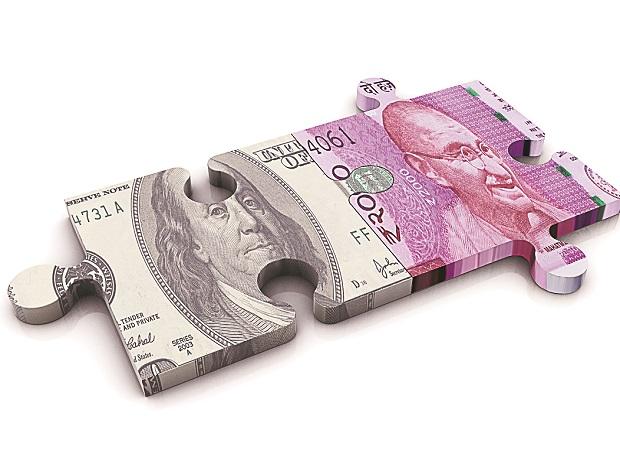
Narendra Modi's thumping election victory is dividing analysts on rupee

Economy News

One of the biggest challenges facing Indian Prime Minister Narendra Modi as he begins his second term is ensuring clean air in a country that’s home to some of the most polluted cities in the world.
The country is burning up more coal to supply cheap electricity to its 1.3 billion people, resulting in polluted air across vast stretches. That’s costing lives and denting the nation’s economic productivity, prompting a policy rethink. Air pollution and how political parties plan to tackle it figured in their manifestos for the first time in national elections that ended May 23.
Efforts in the past to clean up the environment have struggled to clear the test of affordability. India’s fleet of coal-burning power plants, among the biggest sources of air pollution and a dominant provider of cheap energy, have dragged their feet over implementing emission standards, citing cost. A campaign to replace firewood with clean cooking fuel in rural homes needs to be affordable to have greater adoption.A look at what the Modi administration needs to do:
Strengthen the electricity distribution companies. Rejuvenating the power retailers will be crucial for transitioning to cleaner, although costlier electricity. Their losses rose from April to December, reversing a declining trend. Efforts to revive them during Modi’s first term have met with some progress but haven’t been completely successful.
Ensure timely implementation of emissions norms for thermal power plants. One of the reasons this process has moved slowly is a possible reluctance by lenders to finance retrofits in a sector already stressed with a mountain of bad debt. Fixing the money-losing power retailers would be key to resolving the bad loan mess.
Bring fuels, such as natural gas, under the national sales tax regime, helping them compete with dirtier options, such as coal and petcoke. Boosting local production of gas will make it more affordable and help raise its share in the mix to 15%, more than double from now.Accelerate capacity addition in renewable energy, while enabling the grid to deal with the rising flow of intermittent power.Increase use of biomass for energy to help reduce the dependence on crude oil imports and prevent burning of crop residue, a leading air polluter in northern India


Modi govt needs to review manufacturing, private sector investment

Economy News

Voters have reaffirmed faith in the leadership of Narendra Modi. His Bharatiya Janata Party (BJP) won an absolute majority on its own in the Lok Sabha. So, a stable regime will govern the country through the next few years.
The main task before the next government must be to revive the economy. Modi campaigned on the issue of national security, which cannot be ensured without a strong economy. It is now evident that domestic consumption is slowing and farm distress is real. The manufacturing sector is not growing rapidly and export growth has been tepid for five years.
Private sector investment, especially in new manufacturing projects, has been uninspiring. Corporate earnings have been rather weak, although the stock markets are booming. The flow of foreign money into equity markets has strengthened the rupee. The global trading environment is not too encouraging.
For reviving of export growth, given the context and challenges, the new government must first restore the commerce ministry’s primacy in making the new Foreign Trade Policy (FTP). In the run-up to introduction of the Goods and Services Tax (GST) and during its implementation, this ministry was completely ignored. The finance ministry focused mainly on securing consensus in the GST Council and then on re-working of the laws to address the problems thrown up during implementation. The representations of exporters were initially dismissed summarily and later heard partially. Untold misery was inflicted on a large number of exporters by the finance ministry. An ineffective and voiceless commerce ministry was a spectator.

 Now, the latter should not hesitate to take responsibility for export promotion. It should look at the opportunities the US-China trade war throws up and strive to make peace with the United States on trade issues.

Wednesday, April 10, 2019

Trade ministry memo says no legal basis to ban e-cigarette imports: Report

468041842

Economy policy

India's trade ministry says it cannot impose a ban on electronic cigarette imports as there is no legal basis for doing so, an internal government memo viewed by Reuters shows, in a boost for those looking to tap into the country's growing vaping market

This comes amid repeated calls for a ban from the country's health ministry, which urged states and government agencies last year in an "advisory" to step up efforts to halt sales and imports, warning vaping devices pose a "great health risk".

The country has 106 million adult smokers, second only to China, making it a lucrative market for firms such U.S.-based Juul Labs and Philip Morris International that plan to launch e-smoking devices in the country.

India's Jubilant group, one of whose units has the franchisee for Domino's Pizza and Dunkin' Donuts outlets in the country, is already exploring importing Juul's vaping device, a company letter shows.
Halting imports of e-cigarettes into India will be against multilateral commitments with the World Trade Organization, according to the internal government memo dated March 18.
The country must first prohibit local sales through federal regulations that "can stand the scrutiny of law", the memo adds.

Once that is done, the Directorate General of Foreign Trade (DGFT) can announce an "import ban", the memo said.


 As of now, the health ministry's "advisory" cannot be a legal basis for a ban, the trade ministry, which has the power to impose import bans, said in the memo that is not yet public.The DGFT did not respond to a request for comment.

Friday, April 5, 2019

Avolon seeks to de-register 2 planes leased to Jet, woes deepen for airline

Company News

Avolon, one of the world's biggest aircraft lessors, applied to de-register two planes it had placed with Jet Airways Ltd, making it the first lessor to do so on a non-consensual basis with the struggling Indian airline.

Two subsidiaries of Dublin-based Avolon applied to India's Directorate General of Civil Aviation (DGCA) to de-register two Boeing 737-800s, according to notices published on the regulator's website.

Avolon has terminated the leases on the planes and currently has five more aircraft placed with Jet, said sources who declined to be identified due to the sensitivity of the matter.A spokesman for Avolon declined comment on the matter.

The move by Avolon indicates an escalation of a crisis for Jet. The airline, now controlled by its lenders, has had to ground more than three-quarters of its fleet of 119 planes, many due to non-payment to lessors, leading to hundreds of flight cancellations.

With debt of more than $1 billion, Jet has struggled to pay lenders, suppliers, pilots and lessors for months and was on the brink of bankruptcy, but was bailed out last month by state-run banks.
The consortium of lenders temporarily took a majority stake in the company, and agreed to issue a loan of 15 billion rupees ($217 million) to meet Jet's obligations but the money has still not been released.


 The lenders said late on Thursday that they intend to push forward with their plan to rescue Jet, but offered no clarity on interim funding, leaving the future of the carrier hanging in the balance.Frustrated by the unpaid dues, Jet's lessors, including many of the world's biggest players such as GE Capital Aviation Services, Aercap Holdings and BOC Aviation have taken control of their planes, sources said.