Showing posts with label GST council. Show all posts

Tuesday, September 17, 2019

GST Council unlikely to back tax cuts for automobile sector: Reports

International News

The goods and services tax (GST) panel is unlikely to approve lowering the tax for the auto and allied components sector this week, as a study has warned of major revenue losses, two government officials said.
A government study, attached to the agenda of a Sept. 20 GST panel meeting, has said the total annual revenue loss could be as much as Rs 50,000 crore ($6.95 billion), if the panel decided to lower tax rates for the auto sector to 18% from 28%.
Meanwhile, state officials in Kerala, Punjab and West Bengal say they are also opposed to any cut in tax rates in the autos sector, or even consumer goods, because of lacklustre tax collections this fiscal year.
In the April-July period, total tax revenues of 20 states fell 7% to Rs 4.9 trillion compared with the same period last year.
Some states were particularly hard hit, with data showing Andhra Pradesh, Rajasthan and Punjab tax collections plunged 59%, 35.5% and 12.5%, respectively.
"I will oppose any reduction for the simple reason that it won't be revenue neutral," said Thomas Isaac, finance minister of the southern state of Kerala.
The auto sector, which has been reeling from the worst slump in nearly two decades, has pushed for a lowering of tax rates at the Sept 20 GST panel meeting, in a bid to revive vehicle demand.
The GST panel is chaired by the finance minister and all state finance ministers are members. The panel makes decisions by vote.

 Still, those states ruled by the Bharatiya Janata Party may be willing to support a GST cut if the government pushes such a proposal...Read More

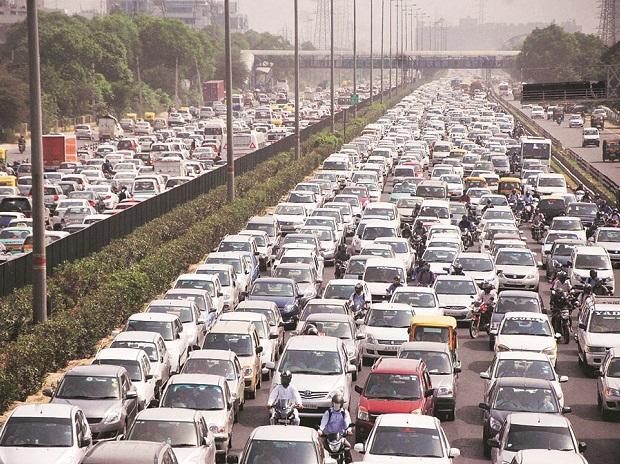
Auto stocks slide on report GST Council unlikely to back tax cut for sector

International News

Shares of automobile companies, including auto ancillary firms, traded lower on Wednesday on report that the goods and services tax (GST) panel is unlikely to approve lowering the tax for the sector this week, as a study has warned of major revenue losses.
According to this Reuters report, a government study, attached to the agenda of a September 20 GST panel meeting, has said the total annual revenue loss could be as much as Rs 50,000 crore ($6.95 billion), if the panel decided to lower tax rates for the auto sector to 18 per cent from 28 per cent.
Another report by The Economic Times said the government body blamed the current liquidity crisis and troubles of non-bank lenders for the woes of the automobile sector.
Meanwhile, state officials in Kerala, Punjab and West Bengal say they are also opposed to any cut in tax rates in the autos sector, or even consumer goods, because of lacklustre tax collections this fiscal year.
Consequently, the Nifty Auto index dipped nearly 1 per cent on Wednesday as compared to a flat benchmark index Nifty50. Among individual stocks, Hero MotoCorp, Escorts Limited, Tata Motors, and Bosch dipped in the range of 1-2 per cent. Maruti Suzuki India slip 2.3 per cent while Ashok Leyland was down as much as 4.2 per cent on the National Stock Exchange (NSE).
The automobile industry has been facing challenges since past three quarters in terms of additional burden of new insurance policy, constraints on loan disbursement from financial institutions and higher axle load norm impacting commercial vehicle (CV) sales, say experts.

 The sector has pushed for a lowering of tax rates at the September 20 GST panel meeting, in a bid to revive vehicle demand.

Sunday, May 26, 2019

Narendra Modi's thumping election victory is dividing analysts on rupee

Economy News

One of the biggest challenges facing Indian Prime Minister Narendra Modi as he begins his second term is ensuring clean air in a country that’s home to some of the most polluted cities in the world.
The country is burning up more coal to supply cheap electricity to its 1.3 billion people, resulting in polluted air across vast stretches. That’s costing lives and denting the nation’s economic productivity, prompting a policy rethink. Air pollution and how political parties plan to tackle it figured in their manifestos for the first time in national elections that ended May 23.
Efforts in the past to clean up the environment have struggled to clear the test of affordability. India’s fleet of coal-burning power plants, among the biggest sources of air pollution and a dominant provider of cheap energy, have dragged their feet over implementing emission standards, citing cost. A campaign to replace firewood with clean cooking fuel in rural homes needs to be affordable to have greater adoption.A look at what the Modi administration needs to do:
Strengthen the electricity distribution companies. Rejuvenating the power retailers will be crucial for transitioning to cleaner, although costlier electricity. Their losses rose from April to December, reversing a declining trend. Efforts to revive them during Modi’s first term have met with some progress but haven’t been completely successful.
Ensure timely implementation of emissions norms for thermal power plants. One of the reasons this process has moved slowly is a possible reluctance by lenders to finance retrofits in a sector already stressed with a mountain of bad debt. Fixing the money-losing power retailers would be key to resolving the bad loan mess.
Bring fuels, such as natural gas, under the national sales tax regime, helping them compete with dirtier options, such as coal and petcoke. Boosting local production of gas will make it more affordable and help raise its share in the mix to 15%, more than double from now.Accelerate capacity addition in renewable energy, while enabling the grid to deal with the rising flow of intermittent power.Increase use of biomass for energy to help reduce the dependence on crude oil imports and prevent burning of crop residue, a leading air polluter in northern India

Modi govt needs to review manufacturing, private sector investment

Economy News

Voters have reaffirmed faith in the leadership of Narendra Modi. His Bharatiya Janata Party (BJP) won an absolute majority on its own in the Lok Sabha. So, a stable regime will govern the country through the next few years.
The main task before the next government must be to revive the economy. Modi campaigned on the issue of national security, which cannot be ensured without a strong economy. It is now evident that domestic consumption is slowing and farm distress is real. The manufacturing sector is not growing rapidly and export growth has been tepid for five years.
Private sector investment, especially in new manufacturing projects, has been uninspiring. Corporate earnings have been rather weak, although the stock markets are booming. The flow of foreign money into equity markets has strengthened the rupee. The global trading environment is not too encouraging.
For reviving of export growth, given the context and challenges, the new government must first restore the commerce ministry’s primacy in making the new Foreign Trade Policy (FTP). In the run-up to introduction of the Goods and Services Tax (GST) and during its implementation, this ministry was completely ignored. The finance ministry focused mainly on securing consensus in the GST Council and then on re-working of the laws to address the problems thrown up during implementation. The representations of exporters were initially dismissed summarily and later heard partially. Untold misery was inflicted on a large number of exporters by the finance ministry. An ineffective and voiceless commerce ministry was a spectator.

 Now, the latter should not hesitate to take responsibility for export promotion. It should look at the opportunities the US-China trade war throws up and strive to make peace with the United States on trade issues.

Monday, March 18, 2019

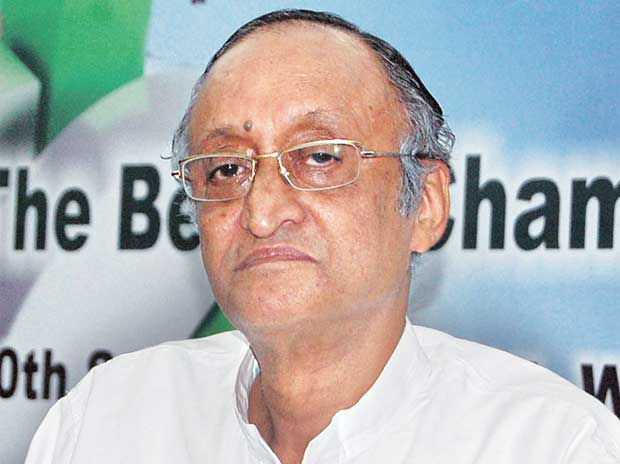
Housing GST rule must be changed, says West Bengal FM Amit Mitra

Economy & Policy:
Ahead of the GST Council meeting on Tuesday, West Bengal Finance Minister Amit Mitra has proposed that the new goods and services tax (GST) rate for ongoing residential housing projects be made optional.

The GST Council meeting slated for Tuesday will take up the issue of finalising the rules and procedures to implement the decisions of the last Council on real estate.

In his latest letter to Union Finance Minister, Arun Jaitley, Mitra has said that while the basic decision of bringing the effective rates of affordable housing and non-housing to 1 per cent and 5 per cent without input tax credit (ITC) was something everyone agreed upon, the mechanism being proposed was highly cumbersome and mind boggling.

Mitra said if the developer had purchased material and taken the ITC, he would be permitted to use only the percentage he had invoiced and had to reverse the rest. This needs to be done project wise though earlier accounts were not maintained project wise, he said. The net result would be that the cost of the project would increase immediately and the consumer would end up actually paying more rather than less, he added.

Also, according to him, the formulae specified would leave a lot of discretion with the tax authorities and might encourage rent seeking.

In the previous meeting, held on February 24, the GST Council had slashed tax rates for under-construction flats to 5 per cent and affordable homes to 1 per cent, effective April 1.

 Currently, GST is levied at 12 per cent with an ITC on payments made for under-construction property or ready-to-move-in flats where completion certificate is not issued at the time of sale. For affordable housing units, the existing tax rate is 8 per cent...Read More

Thursday, March 7, 2019

Relief for industry as govt clears air on levy of GST on promotional offers

Economy & Policy:

In a major relief to manufacturers, distributors, marketers and direct sellers of consumer products, the government on Thursday clarified the extent of tax liability and the eligibility of input tax credit on promotional offers such as free samples and “buy one, get one free”.

Industry players were apprehensive about incre­ased litigation from tax audit authorities if they marketed their products as free, beca­use of ambiguity on such offers. Now, the notification by the Central Board of Indirect Taxes and Customs makes it clear that tax would be applicable and input tax credit would be available for the entire package sold, including the free items.

Experts said the clarification will bring ease of marketing and save litigation troubles for the industry, but most importantly for the FMCG and pharma sectors where such offers are common.

In the case of free samples, such as the ones medical representatives of pharma companies provide to doctors, they would not be considered as supply, and would not attract tax.

For offers such as a discount of 10 per cent for a purchase of more than Rs 1,000 and of 20 per cent for a purchase of more than Rs 2,000, the discounted amount would be excluded to determine the value of supply. Such discounts are generally passed on by the supplier through credit notes.


 But this is applicable only when the discount is made clear at the time of supply. When it is provided after the sale, it is termed as secondary discount, the discounted value should not be excluded to calculate the value of supply...Read More