Showing posts with label I. Show all posts

Friday, March 27, 2020

RBI's rate cut provides the much-needed balm to revive the economy

A rate cut by the Reserve Bank of India (RBI) was much expected this time and the Governor did not disappoint. The aggressive cut of 75 basis points (bps) in the repo rate is commendable, as it provides the balm required to revive the economy. This is evidently meant to counter the negative impact of the coronavirus (Covid-19) pandemic. Governor Shaktikanta Das was very prudent in not giving a forecast for growth or inflation because, as he rightly stated, with things changing so fast, it is not certain how long the threat will last and how its spread and depth will impact the economy. Therefore, the policy is directed towards the immediate problem of mitigating the damage caused by the virus.
The RBI has decided to use a novel way to influence interest rates. The repo rate has come down to 4.4 per cent, while the reverse repo rate is now 4 per cent with a difference of 40 bps. The idea is to ensure that banks do not deposit surpluses in the reverse repo auctions, which is averaging Rs 3 trillion on a daily basis. Now, they will be forced to invest their surpluses in credit rather than giving it to the RBI. This is probably the first time that the central bank has changed this corridor size to 65 bps from 40 bps. It will be interesting to see how banks respond, as they would need to be more responsive to the need of the hour and change their mindset to ensure they lend more to companies.
The move to expand liquidity in the system is again very noteworthy. The twist this time is that the long-term refinance option (LTRO) of Rs 1-trillion will have to be invested in corporate bonds, commercial papers (CPs) or debentures, which in a way will be beneficial for the markets and is, hence, novel. While the LTRO was so far targeted at providing funds for direct lending, this time it is more for direct subscription of paper, which also means it cannot be hoarded or invested in government paper. Second, the cash reserve ratio (CRR) cut provides another 1 per cent of NDTL to banks for lending purposes with a lower minimum daily balance to be maintained.
The MSF increase of 1 per cent, along with the above two measures, would infuse another Rs 3.74 trillion into the system – that is a big jump in liquidity. Combine this with the open-market operations (OMO) and LTRO of the past, and the monetary stimulus provided is 3.2 per cent of GDP, which is quite substantial from the point of view of the RBI, which has supplemented the efforts of the government in alleviating the pain caused by Covid-19.
The regulatory measures are also important because this is something that the market players were looking forward to. The three-month moratorium on all term loans is quite the need of the hour, which will make it easier for companies as the cut in supply chains and the lockdown have meant a severe blow to most companies in terms of their ability to service debt. For banks, a deferment of maintenance of the last tranche of the capital conservation buffer would provide relief as they also readjust their balance sheets to meet regulatory compliances.

On the whole, the announcements are very good and the RBI has done this well in time so that from the monetary end all impediments are addressed to a large extent. The assurance that Indian banks are very safe is timely, as there had been some scepticism building up early this month.

Friday, September 27, 2019

India should integrate AI with education to become world leader: Sikka

International News
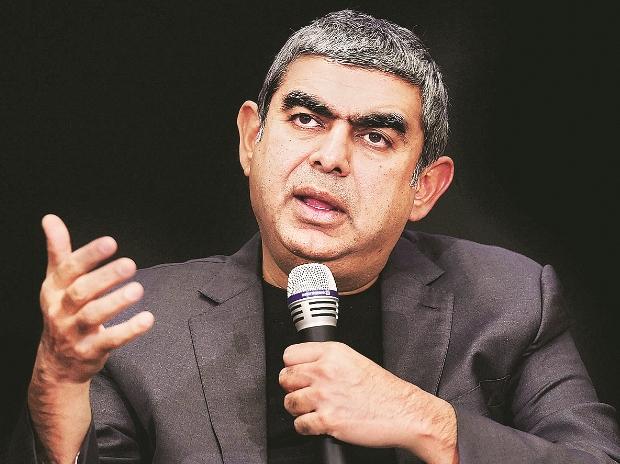
Former Infosys CEO Vishal Sikka, who has announced a new AI startup with $50 million fund, believes India has the potential to become a world leader in artificial intelligence but the key to this is integrating AI into the country's education system in a massive way.
India is at "an inflection point" when it comes to AI or artificial intelligence, Sikka said.Over the next 20-25 years, AI is going to be "a very, very big disruptor" for the Indian society because what one is seeing now in terms of automation and job losses because of automation is just the beginning, said Sikka, who announced his startup Vianai Systems last week.
"But on the other hand, if we are able to bring AI education, the ability to build AI systems to India at a very large scale, and I'm talking about like billion plus people, then India can really leap frog and become the world's leader in artificial intelligence, in AI skill and AI talent," Sikka told PTI in an exclusive interview.
Doing that requires working on multiple dimensions in parallel, he said.
Last month, at the request of Prime Minister Narendra Modi, Sikka gave a presentation before the NITI Aayog how to expand the reach of AI to the Indian society in a very big way.
Representatives of some 20 Union ministries were present during his presentation on AI and India. This, he said, required creating necessary infrastructure to bring the talent through institutions, schools and educational institutions, the ability to do AI education at a large scale.

 According to Sikka, the prime minister said he personally saw whenever classes worked into digital classrooms, he was joking that children would sometimes even forget to eat their lunch because they were so engrossed in learning. "It was very encouraging...READ MORE