Showing posts with label Indian Space Research Organisation. Show all posts

Monday, August 19, 2019

Chandrayaan 2 reaches Moon's orbit, is just days away from landing

Current Affairs

India's second Moon Mission, Chandrayaan 2, successfully entered the lunar orbit on Tuesday morning in a significant milestone that brings India closer to joining select nations that have explored the moon. Isro Chairman Kailasavadivoo Sivan had earlier described this event as a major challenge.
Lunar Orbit Insertion (LOI) manoeuvre was completed successfully today (August 20, 2019) at 0902 hrs IST, as planned, using the on-board propulsion system. The duration of the manoeuvre was 1,738 seconds. With this, Chandrayaan-2 was successfully inserted into a Lunar orbit. The orbit achieved was 114 km x 18,072 km.
The Indian Space Research Organisation (Isro) fired the spacecraft's liquid engine for a short while and placed it on a lunar bound orbit. From here, the spacecraft is scheduled to go through four more orbit manoeuvres to reach its final orbit passing over the lunar poles at a distance of about 100 km from the Moon's surface.Subsequently, the lander will separate from the Orbiter and enter into a 100 km X 30 km orbit around the Moon. Then, it will perform a series of complex braking manoeuvres to soft land in the South polar region of the Moon on September 7, 2019.
Chandrayaan-2 will attempt to soft land the lander Vikram, and rover Pragyan, in a high plain between two craters, Manzinus C and Simpelius N, at a latitude of about 70° south. The mission has 13 Indian payloads, including eight on Orbiter, three on lander and two on rover, and one passive experiment from US space agency NASA.

 The health of the spacecraft is being continuously monitored from the Mission Operations Complex (MOX) at Isro Telemetry, Tracking and Command Network (ISTRAC) in Bengaluru with support from Indian Deep Space Network (IDSN) antennas at Bylalu, near Bengaluru. All the systems of Chandrayaan-2 are healthy...Read More

Thursday, July 25, 2019

Chandrayaan-2: 2nd orbit-raising smooth, expected to reach Moon on Aug 20

Current Affairs

Indian Space Research Organisation (Isro) successfully conducted the second Earth-bound orbit raising maneuver for the Chandrayaan-2 spacecraft.
Isro officials said that second maneuver has been performed successfully on Friday at 0108 hours (IST) as planned, using the onboard propulsion system for a firing duration of 883 seconds. The orbit achieved was 251 x 54829 km. All spacecraft parameters were normal.
The third orbit raising maneuver is scheduled on July 29, 2019, between 1430–1530 hours (IST).India's second mission to the Moon, Chandrayaan-2, is expected to reach the Moon on August 20, 2019.
The first earth-bound orbit raising maneuver for Chandrayaan-2 was performed successfully on July 24, 2019, at 1452 hours (IST) as planned.
Between July 26 and August 8, four Earth-bound maneuvers have been planned, culminating in Trans Lunar Insertion on August 14, which will send Chandrayaan-2 to the Moon.
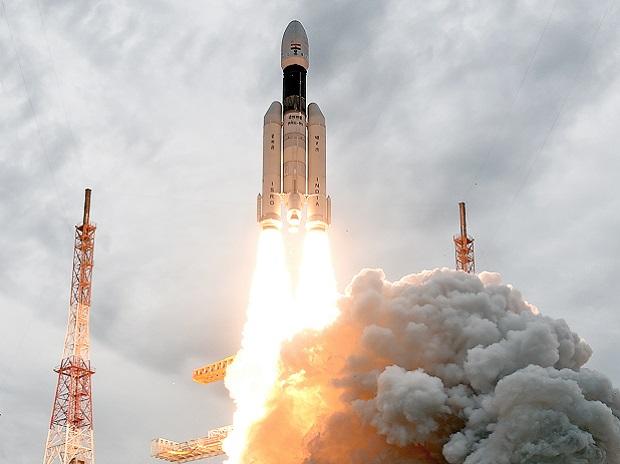
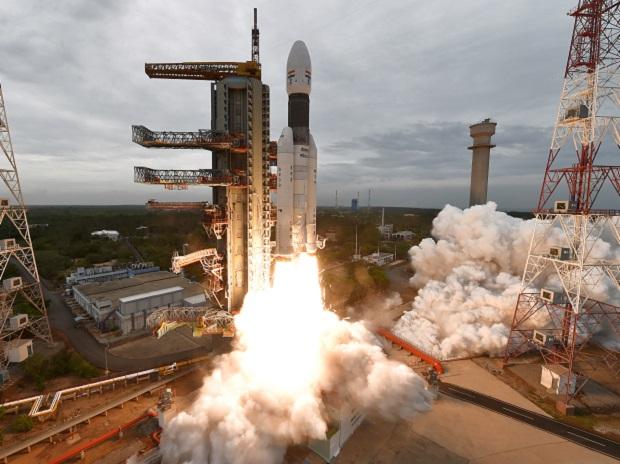
On July 22, at 2.43 pm, the Geosynchronous Satellite Launch Vehicle-Mk III (GSLV-Mk III), carrying the 3.8-tonne Chandrayaan-2 spacecraft, lifted off from its launchpad.The GSLV-Mk III costs Rs 375 crore and Chandrayaan-2 Rs 603 crore.
After a technical snag made Isro abort the takeoff on July 15, the space agency succeeded in putting the satellite in the desired orbit, or a better orbit, as the first step of its 48-day journey to the Moon's unexplored south pole, about 384,000 km away.

 Despite its journey being delayed by a week, the space agency has reworked its schedule so that it can land on the south pole on the previously fixed date...Read More

Monday, February 4, 2019

Isro set to launch communication satellite GSAT-31 on February 6

Current Affairs:

The Indian Space Research Organisation is all set to launch its 40th communication satellite GSAT-31 on Wednesday from the spaceport in French Guiana.

The satellite with a mission life of 15 years will provide continuity to operational services on some of the in-orbit satellites and augment the Ku-band transponder capacity in Geostationary Orbit, the space agency said.

In a statement, the Indian Space Research Organisation (ISRO) said the satellite, weighing about 2,535 kg, is scheduled for launch onboard the Ariane-5 (VA247) from Kourou in French Guiana.
"The satellite GSAT-31 is configured on ISRO's enhanced I-2K Bus, utilising the maximum bus capabilities of this type. The satellite derives its heritage from ISROs earlier INSAT/GSAT satellite series. The satellite provides Indian mainland and island coverage," the agency said.


 ISRO also said the GSAT-31 will be used for supporting VSAT networks, television uplinks, digital satellite news gathering, DTH television services, cellular back haul connectivity and many such applications...Read More