Showing posts with label bad loans. Show all posts

Friday, April 17, 2020

Reserve Bank tries to reduce NPA burden for lenders in coronavirus crisis

The Reserve Bank of India (RBI) on Friday announced additional set of regulatory measures to reduce the burden of debt servicing due to disruptions caused by the coronavirus (Covid-19) pandemic, including an asset classification standstill for accounts that avail a moratorium between March 1 and May 31.
Such accounts will, therefore, be classified as non-performing assets from 180 days of overdue, rather than the current norm of 90 days, according to a set of measures announced by RBI Governor Shaktikanta Das on Friday.
“Economic activity has come to a standstill during the period of the lockdown, with consequential lingering effects which have unambiguously affected the cash flows of households and businesses,” the RBI said.
On March 27, the RBI had permitted lending institutions in India to grant a moratorium of three months on payment of current dues falling between March 1 and May 31, 2020.
It is recognised that the onset of Covid-19 has also exacerbated the challenges for such borrowers even to honour their commitments fallen due on or before February 29, 2020 in standard accounts, the RBI governor said.
“Therefore, it has been decided that in respect of all accounts for which lending institutions decide to grant moratorium or deferment, and which were standard as on March 1, 2020, the 90-day NPA-norm shall exclude the moratorium period, i.e., there would an asset classification standstill for all such accounts from March 1, 2020 to May 31, 2020,” the RBI said.
But the banks will have to make additional provisioning for such accounts to ensure banks maintain sufficient buffers and remain adequately prepared to take a hit in case the loans go bad. “They will have to maintain higher provision of 10 per cent on all such accounts under the standstill, spread over two quarters, i.e. March 2020 and June 2020. These provisions can be adjusted later on against the provisioning requirements for actual slippages in such accounts,” the RBI said.

The RBI will further issue a detailed circular revising its framework on resolution of stressed assets dated June 7, 2019. The RBI has decided to grant additional 90 days for banks to come up with resolution plan. Under the existing guidelines, all lenders are required to hold an additional provision of 20 per cent if a resolution plan has not been implemented within 210 days from the date of such default.

Tuesday, February 11, 2020

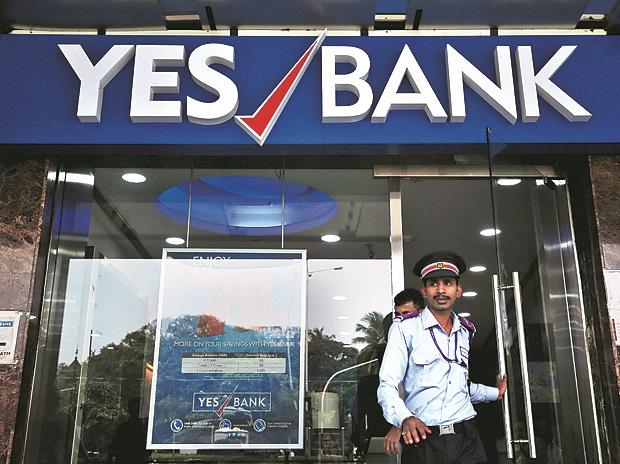
Falling deposits are the latest problem for Yes Bank after bad loans

Current Affairs
At the point when a previous YES Bank official began selling his stake in September, the loan specialist's top chiefs looked for any sign that the subsequent drop in share cost would trigger a hurry to pull back stores.
The stock deals came as clients of a local moneylender — Punjab and Maharashtra Co-employable Bank — were arranging outside its branches to pull back their cash following a supposed administration misrepresentation. Uncontrolled theory online about more extensive disease constrained the national bank to give uncommon proclamations guaranteeing the general population of the security of the money related framework. Indeed Bank's loss of mother and-pop stores in September was reasonable at last, however it highlighted a hazard for the moneylender whose peers HDFC Bank and ICICI Bank drew more reserve funds from clients during that period. India's fourth-biggest private bank has had a turbulent 2019 with another CEO incapable to raise the capital expected to support proportions that stand simply over an administrative least and control expert inquiries regarding its steadiness.
"It is currently an endless loop where an absence of capital is expanding worries on the bank's awful advances, making vulnerability among speculators and investors, which is adding to the withdrawal of minimal effort and retail term stores," said Ravikant Anand Bhat, an expert at IndiaNivesh Securities.

The moneylender's offer cost failed 74 percent a year ago as soured obligation mounted given its presentation to shadow banks ensnared in a drawn out smash in the nearby credit advertise. The dive has proceeded with this year, with shares dropping another 21 percent even as a benchmark file stayed minimal changed. The bank is because of report results for the December quarter, which will show whether stores dissolved further over the most recent three months of 2019....READ MORE

Monday, September 16, 2019

A bank's race against crisis has served a warning to Indian banking

International News
India’s fragile financial system is swinging between despair and hope. Two separate incidents — both featuring the lender YES Bank Ltd — recently underscored the drag of past underwriting follies as well as the lift from a digital reset. It will take time, but good things will come to Indian banking as a result of the present crisis.
Start with the sudden default by financier Altico Capital India Ltd. on a 199.7-million-rupee ($2.8-million) interest payment to Abu Dhabi-based Mashreqbank PSC. Clearwater Capital Partners-backed Altico, which borrows money from banks and mutual funds to make loans to property developers, called the situation a “liquidity crisis.” And that made YES Bank investors gloomy.
Based on January data, the midsize Indian bank had a 4.5-billion-rupee exposure to Altico, the third-highest after Mashreq and HDFC Bank Ltd.
While HDFC Bank, the country’s most valuable lender, has the capital — and current profit — to take the occasional credit hit, YES’s capital cushion is already frayed by dodgy loans to beleaguered shadow banks and troubled tycoons. Both these borrower groups have found it hard to refinance debt since the collapse last year of IL&FS Group, a large Indian infrastructure financier and operator. Altico’s unraveling shows that an end to credit woes is not yet in sight.

 At more than $200 billion, India’s world-beating pile of bad loans is bigger than Italy’s. State-run Indian banks are carrying the bulk of the burden, but at least they’re getting dollops of taxpayers’ money and being merged into fewer banking groups. A private-sector lender like YES doesn’t have a formal public backstop. If it can’t fend for itself, the central bank could step in and force an arranged match with a better-run bank. The terms won’t be favorable to Yes shareholders...Read More

Tuesday, July 30, 2019

RBI allows domestic banks to sell NPAs abroad as one-time settlement

International News

The Reserve Bank of India (RBI) on Tuesday allowed domestic banks to directly sell their bad loans in manufacturing and infrastructure sectors to investors abroad as part of one-time settlement (OTS) exercises. The move will allow overseas investors to take direct loan exposure to Indian corporates.
The defaulters, or stressed borrowers, can sell their assets in accordance with the OTS scheme, in order to raise external commercial borrowing (ECB) from abroad to repay domestic loans, the RBI said in a statement.
At the same time, Indian corporates can raise long-term loans for working capital, ‘general corporate purposes’ and repaying domestic rupee loans, the statement said.
Apart from easing the non-performing asset (NPA) pressure on domestic banks, the RBI’s move can allow companies to raise cheap, long-term loans easily now. Part or all of that can be used to retire domestic loans.
The RBI notification said corporate borrowers can avail of ECB “for repayment of rupee loans availed domestically for capital expenditure in manufacturing and infrastructure sector and classified as SMA-2 or NPA, under any one-time settlement arrangement with lenders”. SMA is special mention account, in which SMA-2 is the loan not serviced between 60 days and 90 days.
If the loan is not serviced on the 91st day, it becomes NPA.

 “Lender banks are also permitted to sell, through assignment, such loans to eligible ECB lenders, except foreign branches/overseas subsidiaries of Indian banks, provided, the resultant external commercial borrowing complies with all-in-cost, minimum average maturity period and other relevant norms of the ECB framework,” the notification said...Read More

Sunday, June 23, 2019

Just like Japan, Europe may struggle to escape from anaemic growth: ING

Company News

The euro area’s anemic growth and inflation mean it’s probably already experiencing its own Japanification, and escape could prove hard if the Asian nation’s track record is any guide, according to ING Group.
Europe’s situation has long left it open to comparisons with Japan in the 1990s. In a report on Monday, ING lists similarities including an increase in government debt, a buildup of bad loans at banks, an aging population and huge monetary policy loosening.
While Japan’s policy response to its crisis was slow, it also fell victim to bad timing, according to ING. Various chances of recovery were snuffed out by the 1997-98 Asian financial crisis, then the bursting of the dot-com bubble and later the global financial crisis.
That may well be the fate of the euro area, too, which last year appeared to be on the verge of unwinding stimulus only to be pushed back in the other direction. With global trade tensions weighing on sentiment and inflation expectations near a record low, the European Central Bank is facing the prospect of interest rate cuts or re-starting quantitative easing.
“Without a strong recovery, it is difficult to escape the low growth, low inflation and subsequently low rates environment,” said Carsten Brzeski and Inga Fechner, economists at ING. “An economic upturn could quickly be over and monetary policy might not have enough ammunition up its sleeve, with interest rates remaining stuck at the zero lower bound for years to come.”

 The parallels mean Europe could be facing a ballooning of its central bank balance sheet in the years to come, and a major fiscal package could be needed. There’s also the prospect of higher retirement ages to keep prevent the labor force from shrinking.“For the euro zone, the most important lesson is probably not so much the root cause of Japanification but the desperate attempts to get out it,” ING said.