Showing posts with label economics. Show all posts

Tuesday, October 15, 2019

Economics is changing: A Nobel for 3 pragmatic poverty-fighters shows that

International News
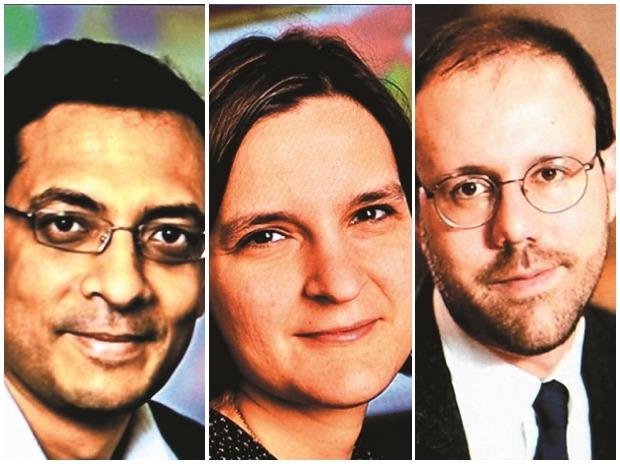
This year’s economics Nobel prize went to three worthy economists — Abhijit Banerjee and Esther Duflo of the Massachusetts Institute of Technology, and Michael Kremer of Harvard University. The prize, which was awarded “for their experimental approach to alleviating global poverty,” shows several important ways that the economics discipline is changing.
A popular conception of economists is that they’re the high priests of the free market, downplaying the role of government and giving short shrift to the needs of society’s poorest. A great many economists defy this stereotype, spending their careers studying how to uplift the poorest citizens of the developing world through government action. Banerjee, Duflo and Kremer fall into this category.
For example, all three have studied the benefits of education. Citizens of developed countries generally take universal public education for granted, along with the economic wealth that an educated populace creates. Developing countries, such as Kenya and India, don’t have this luxury. In 2003, Kremer reviewed a series of randomized controlled trials in Kenya that found that spending more on education was effective, but that health treatments like deworming were also useful for keeping kids in school. Banerjee and Duflo, along with co-authors Shawn Cole and Leigh Linden, studied a program that hired tutors for underperforming students in India, as well as a computer-assisted learning program, and concluded that both were effective. Duflo has also found big wage gains from public education spending in India, confirming the central role of schools for economic growth.

 Over the years, Banerjee, Duflo and Kremer looked at programs that nudge developing-world farmers to use more fertilizer, provide microcredit to slum residents, create quotas for women in local government, provide deworming treatments for the poor, eradicate malaria, and many other targeted ...READ MORE

Can paying poor nations to admit refugees solve the mass migration puzzle?

International News
Much of the commentary about Michael Kremer, named this week as one of three winners of the Nobel Memorial Prize in Economic Sciences, has justifiably celebrated his pioneering work in studying poverty — even now, many of us believe, the planet’s greatest moral challenge. But an important 2011 Kremer paper, overlooked in the celebration, helps to shed light on another great challenge of our day: refugee policy.
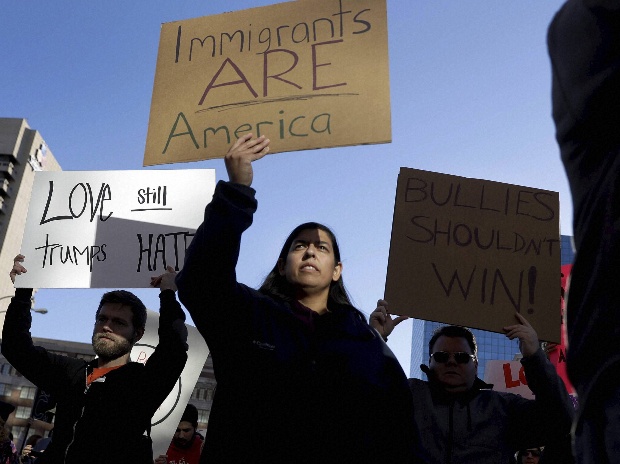
His work helps explain the immigration pressures that have been roiling politics around the world. In the wake of the disaster in Syria and other crises, refugees have flooded Europe. Nationalist parties have responded by playing to the sentiment that migrants are stealing jobs. They promise tougher standards for immigrants, a stance with the potential to harm migrants fleeing persecution. The United Nations puts the number of people seeking refuge in the tens of millions.
In the U.S., worries about immigration helped swing the 2016 presidential election. The fear that economic migrants hurt wages among blue-collar workers may not be well-founded, but in recent years has been widely shared. Polling data suggest that sentiment may be changing, but to the extent that the fear of economic loss becomes the basis of immigration policy, refugees are likely to suffer from it.

 “The Economics of International Refugee Law,” which Kremer co-authored with Ryan Bubb and David I. Levine, presents a useful model to explain why refugee policy tends to become such a mess, even if everyone starts out with the best of intentions.Kremer and his co-authors begin with a reminder that a nation that chooses to accept migrants fleeing political prosecution provides a public good from which other countries will benefit. The larger the number of countries that provide asylum, the less the incentives for others to do the same...READ MORE