Showing posts with label Interim Budget 2019. Show all posts

Tuesday, February 12, 2019

No tax liability if your income is up to Rs 9.5 lakh, but conditions apply

Personal Finance News:

Stressing that tax concessions have been provided with a view to help poor and middle-class people living on a tight budget, Finance Minister Piyush Goyal said that now individuals earning up to Rs 9.5 lakh can escape liability by taking advantage of saving schemes.

Replying to the debate on the Finance Bill in Lok Sabha, the Minister said he did not propose any change in the tax rate but only provided few rebates which will boost spending and help the economy.
The Finance Bill, which contains tax proposals, was passed by the Lok Sabha with a voice vote, completing the budgetary process in the lower house.

In a swipe at the Congress, the Minister said that unlike the previous UPA dispensation, the present Modi government in the interim budget did not reduce levies of SUVs which are used by rich persons.

In the Finance Bill 2019, the Minister proposed to raise tax rebate for people having annual income up to Rs 5 lakh from Rs 2,500 to Rs 12,500, which will effectively ensure that they don't have to pay any tax.

In the Bill, standard deduction has also been raised from Rs 40,000 to Rs 50,000, besides a host of tax benefits to home buyers.

The concessions proposed in the Finance Bill, Goyal said, are aimed at helping "poor and middle-class people living on a tight budget...This is interim budget. We have not brought any tax proposal...we will bring them in July," he said.


 The next government, which will be formed after the upcoming general elections, will come out with a full budget in July. The next government will also come up with a Finance Bill containing the tax proposals for 2019-20.

Wednesday, February 6, 2019

Govt may roll over Rs 33,000-35,000 crore in subsidy payments to FY20

Business Standard has learnt from senior government officials that the petroleum subsidy amount rolled over to FY20 will be around Rs 13,000 crore

Economy & Policy:

To help meet its revised fiscal deficit target of 3.4 per cent of gross domestic product for 2018-19, the Centre is highly likely to rollover as much as Rs 33,000-35,000 crore in combined food, petroleum and fertiliser subsidies to 2019-20. Additionally, Business Standard has learnt that the 2019-20 interim Budget assumed an average crude oil price of $65 a barrel for the next fiscal year, the same as this year.
If these sums are not rolled over, the fiscal deficit for this year could be as high as 3.55 per cent of gross domestic product (GDP). The combined fertiliser, food and petroleum subsidy budgeted estimate for FY19 is Rs 2.64 trillion, while the revised estimate is Rs 2.66 trillion. If the carrying forward to FY20 does not happen, the revised estimates for the major subsidies could actually cross Rs 3 trillion for the first time ever.
Business Standard has learnt from senior government officials that the petroleum subsidy amount rolled over to FY20 will be around Rs 13,000 crore. Food subsidy could see a rollover of around Rs 10,000 crore, while fertiliser subsidy rolled over to FY20 may be in the region of Rs 10,000-12,000 crore.

 “We are admitting that we will roll over Rs 13,000 crore in petroleum next year. This year we had budgeted the subsidies at $65 a barrel. It went to above $80 and then came down again, and hence the higher subsidy bills. For the next year also we have budgeted $65/barrel. The budgeted estimates for the next year is more than revised estimates this year because of rolled over payments,” said an official.

No support for govt employees, taxpayers under PM-KISAN scheme for farmers

Interim Budget 2019:

Families of farmers who have one or more members paying taxes or are a government employee will be ineligible for benefit under the Pradhan Mantri Kisan Samman Nidhi (PM-KISAN) scheme.


Families with at least one member drawing a monthly pension of Rs 10,000 will be ineligible, according to the guidelines issued to the states by the Centre on Wednesday. Families who have professionals such as doctors, engineers, lawyers, chartered accountants or architects will be left out too.

Announced in the Interim Budget, the scheme is supposed to provide an additional Rs 6,000 per annum income support to small and marginal farmers.A small or marginal farmer family is defined as "a family comprising husband, wife, and minor children, who collectively own cultivable land up to 2 hectare according to the land records of the state or Union Territory".


Families of former members of Parliament or Legislative Assemblies or even chairpersons of district panchayats would also be ineligible for benefit.


Some government employees, however, have been exempted from exclusion, such as those among the multitasking staff or classified in Class IV or Group "D" categories.

 The guidelines also said state governments can allow self-declaration of the beneficiary for exclusion, but the entire income-support transferred to him could be recovered and penal action initiated if the declaration is incorrect...Read More

Monday, February 4, 2019

Interim Budget falls short on a key promise made by Modi; creating jobs

Interim Budget 2019:

India’s budget provided plenty of giveaways to farmers and middle-class voters, but was short on detail on one of Prime Minister Narendra Modi’s key promises: creating jobs.

The issue has become a politically sensitive one ahead of elections due by May, with the government accused of deliberately withholding the most recent labor report because of the possible bad news it presents. A local newspaper published leaked details of the report a day before the budget, showing the unemployment rate reached a four-decade high of 6.1 per cent in the year to June 2018.

Modi swept to power in May 2014 with the biggest electoral mandate in three decades after promising to create 10 million jobs each year. Finance Minister Piyush Goyal said in his budget speech last week that 20 million “employment opportunities” were added in two years. Yet no official labor survey has been published since 2016, when the unemployment rate was reported at 5 per cent.


 Much of the budget focused on consumer stimulus -- such as the $10.6 billion-plan to pay cash to farmers -- with few specific measures to help boost businesses to create opportunities for about 12 million young people who enter the job market each year...Read More

Interim Budget 2019: Using technology to increase tax base and reduce rates

Economy & Policy:

In the Interim Budget 2019 speech, Finance Minister Piyush Goyal has reiterated the government's aim to continue technology-led tax reforms.

Technology to increase tax base and reduce rates

The use of technology is the only sustainable measure to increase tax compliance, tax base and eventually, tax collections. It is only when the government has reasonable surety of tax collections, can it take the steps to reduce tax rates and lower the burden on existing tax payer base.

According to government data sources, FY18 saw a 26 per cent rise in the number of income tax returns filed compared to last year, effectively adding 9.95 million new income tax payers. Estimates, according to statements of senior revenue officials, for new taxpayers to be added in 2019-20 is around 10 million. Consequently, there has also been a steady increase in tax collection year-on-year. This has allowed the government to reduce tax rates, for instance slashing the rates for companies having turnover below Rs 250 crore to 25 per cent and recent reductions in GST rates. Major contributors to these initiatives are technology-led reforms.

Digital tax administration and taxpayer experience


 It is not too far in history when individual taxpayers had to undergo several rounds of follow-up with the tax office to initiate refunds. With the set-up of Bangalore CPC, refunds for individual taxpayers are swift and relatively quite easy...Read More

Thursday, January 31, 2019

Interesting facts about the Budget every Indian should know

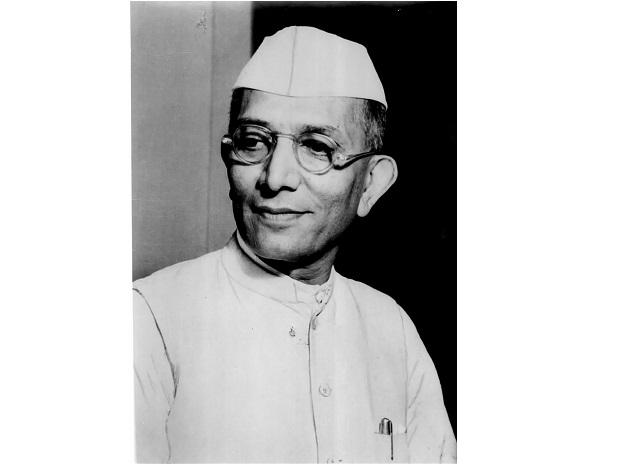
  • MORARJI DESAI HOLDS THE RECORD OF PRESENTING THE MOST BUDGETS, AT 10
  • INDIRA GANDHI IS THE ONLY WOMAN TO HAVE PRESENTED INDIA'S UNION BUDGET
  • R K SHANMUKHAM CHETTY PRESENTED INDIA'S FIRST BUDGET ON NOVEMBER 26, 1947
  • A CUSTOMARY HALWA CEREMONY IS PERFORMED 10-12 DAYS AHEAD OF THE BUDGET EVERY YEAR
  • MORARJI DESAI IS THE ONLY FINANCE MINISTER TO PRESENT A BUDGET ON HIS BIRTHDAY ON FEB 29, 1964 AND 1968
  • IN 1997-98, WHEN I K GUJRAL'S GOVT WAS ON ITS WAY OUT, THE BUDGET WAS PASSED WITHOUT DEBATE
  • P CHIDAMBARAM'S 1997-98 BUDGET WAS TERMED AS DREAM BUDGET FOR LOWERING TAX RATES
  • YASHWANT SINHA CHANGED THE TIMING OF BUDGET PRESENTATION TO 11AM FROM 5PM IN 1999
  • BUDGET WAS PRESENTED ON THE LAST WORKING DAY OF FEB UNTIL 2016, BUT JAITLEY CHANGED IT TO FEB 1 IN 2017

  • IN 2017, THE RAILWAY BUDGET WAS PRESENTED WITH THE UNION BUDGET BREAKING A 92-YEAR-OLD PRACTICE

5 factors that drove Sensex 500 points higher ahead of Interim Budget 2019

Interim Budget 2019:

Markets gained ground on Thursday with the S&P BSE Sensex rallying over 500 points, or around 1.5 per cent, in intra-day deals. On the National Stock Exchange (NSE), the Nifty50 moved up around 1.3 per cent, or 140 points, to hit an intra-day high of 10,813.
Here are five factors driving the markets:

Status quo by the US Federal Reserve: The US Federal Reserve held rates steady at the end of its two-day meeting, which ended Wednesday. The Federal Open Market Committee “will be patient as it determines what future adjustments to the target range for the federal funds rate may be appropriate,” the central bank said in a statement Wednesday.

“FOMC statement and Powell’s press conference confirm our view that the Fed’s pause is, in reality, the end of the hiking cycle. We expect the Fed’s target range for the federal funds rate to remain unchanged for the remainder of the year, followed by rate cuts in 2020 as the economy starts to slide into a recession," said Philip Marey, senior market strategist at Rabobank International.

Supportive global cues: Asian stocks rose to a four-month high on Thursday after the US Federal Reserve pledged to be patient with further interest rate hikes, signalling a potential end to its tightening cycle amid signs of slowing global growth. MSCI's broadest index of Asia-Pacific shares outside Japan rose to its highest since October, while Japan's Nikkei moved up 1 per cent.


 Interim Budget & fiscal prudence: Finance minister Piyush Goyal will present the Interim Budget 2019 on Friday. Though markets expect the proposals to have a populist undertone ahead of general elections scheduled for April / May 2019, they do not expect the government to sway significantly from the path of fiscal prudence.

Wednesday, January 30, 2019

2019 polls: Why govt should aim to create jobs, not offer basic income

General Election 2019:

During election season, which we’re entering in India, everyone likes the idea of giving voters more money. Congress Party President Rahul Gandhi, the de facto opposition leader, says his party will guarantee a minimum income for the country’s poor if victorious. Reports suggest that Prime Minister Narendra Modi’s government may compete by announcing some form of direct transfer of cash to farmers in the interim budget to be revealed on Friday, which could cost the exchequer nearly $10 billion annually.

While governments everywhere should take care of their most vulnerable citizens, the idea of guaranteeing a basic income is wrong for India right now. Fundamentally, it would only work if two conditions were met. First, large sections of the population would have to be mired in absolute poverty. And second, all other subsidies and welfare programs for them would have to be abolished in order to free up the necessary funds without completely blowing open India’s fiscal deficit, which is already strained.

ALSO READ: Interim Budget 2019: Before polls, govt wants expansionary economic policy


 Neither condition prevails in India. While there’s no recent government estimate of the number of people living below the poverty line, credible research by the Brookings Institution suggests that extreme poverty in India, defined as those living on less than $2 a day, now afflicts only five percent of the population. Granted, that’s still more than 70 million people. But, for the vast majority of Indians, the challenge is no longer subsistence, it’s aspiration. No basic income guarantee will be able to address rising aspirations unless it’s a very large sum of money. At India’s level of national income, providing anything more than a subsistence income would simply be unaffordable...Read More

1 in 6 elementary school teachers not professionally trained in India

Economy & Policy News:

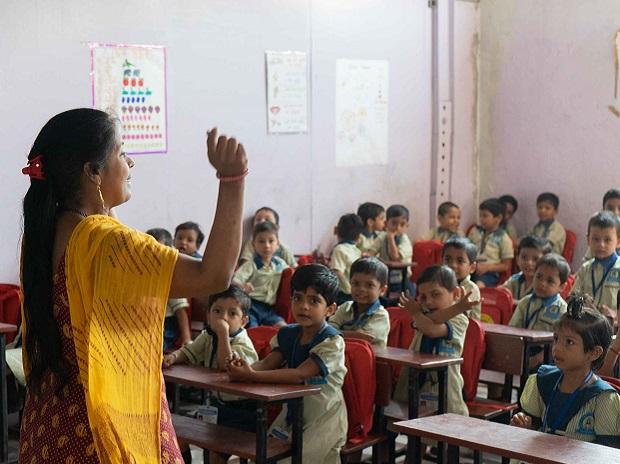
With nearly one in six elementary school teachers not professionally trained, India must improve its spending on teacher training--just 2% of the 2018-19 budget allocated for Samagra Shiksha Abhiyan (‘holistic education programme’) was spent on teachers’ training institutes.The projected budget allocation for the programme for 2019-20 is estimated to be Rs 34,489 crore, an increase of 10.5% from the 2018-19 budget estimate, according to a medium-term expenditure projection statement presented to parliament in August 2018.
Launched in 2018 by combining Sarva Shiksha Abhiyan (‘education for all’), Rashtriya Madhyamik Shiksha Abhiyan (‘national middle education mission’) and teachers’ education programmes, Samagra Shiksha Abhiyan aims to provide support for both pre-service and in-service teacher training.
Teacher training is imperative for improving learning outcomes in Indian classrooms, as acknowledged by the Three Years Action Agenda of the government think-tank NITI Aayog, as well as in the 2018 budget speech that emphasised on the need for professionally qualified teachers for school education reform.

 Only half of 10- to 11-year-olds in India can read a grade II level text (appropriate for seven- to eight-year-olds), as IndiaSpend reported on January 25, 2019. In rural India, almost half of grade V students cannot read a grade II text and more than 70% them cannot carry out simple division...Read More

Monday, January 28, 2019

What 2019 Budget can do to help India clean its air, reduce coal addiction

Interim Budget 2019:

India has one of the world’s largest programmes to expand renewables--a doubling of capacity over the next four years--but India’s ambitious 2022 target of generating enough non-coal energy to replace the equivalent of 175 coal-powered plants is veering off track.

On February 1, 2019, the ruling Bharatiya Janata Party (BJP) has a chance to get things back on track, help India reduce its addiction to coal, help clean the country’s air and meet the global climate-change commitments of the world’s fourth-fastest growing carbon polluter

After record growth in the installed capacity of renewables over the four years to 2017, capacity addition slowed down in 2018. The main reasons: an anti-dumping duty imposed by the government on imported solar modules to aid domestic manufacturing, higher rates of taxation under the goods and service tax (GST) and unclear policy.So, the last budget before 2019 general elections is of particular significance to the renewables sector, which comprises electricity from solar, wind, hydro and bio power.

These are the issues the budget must contend with:

  • Due to a 2018 slowdown, the government will have to install 3.5 times more capacity every month than its average speed for the last four years.
  • A new duty on imported solar modules--which meet more than 80% of the country’s need--increased production costs and threaten the competitiveness of solar tariffs against those of coal.
  • Higher GST rates on solar modules and services are driving away investors and manufacturers. Delays in a long-term policy to remove uncertainty from the sector is holding back new investment.

As India's quality of schooling plummets, here's how Budget 2019 can help

Interim Budget 2019:

India stepped up its spending on school education by 9.35% from 2014-15 (Rs 45,722.41 crore) to 2018-19 (Rs 50,000 crore). But education’s share in the total union budget fell from 2.55% to 2.05% in this period, according to an IndiaSpend analysis of budgetary data.

On February 1, 2019, when the ruling Bharatiya Janata Party (BJP) presents its last budget before general elections, it will have to address a critical issue in India’s school education: Its quality compares poorly with many south Asian and BRICS nations even though India spends a higher percentage of its gross domestic product (GDP) on education.In rural India, almost half of grade V students cannot read a grade II text and more than 70% them cannot do division, said the Annual Status of Education Report (ASER) 2018. These numbers indicate a fall in standards over the last 10 years.

Why schooling needs special attention this budget

The school education system in India is facing a shortage of trained teachers and a lack of proper infrastructure. Here are some factors that need to be addressed in the budget:
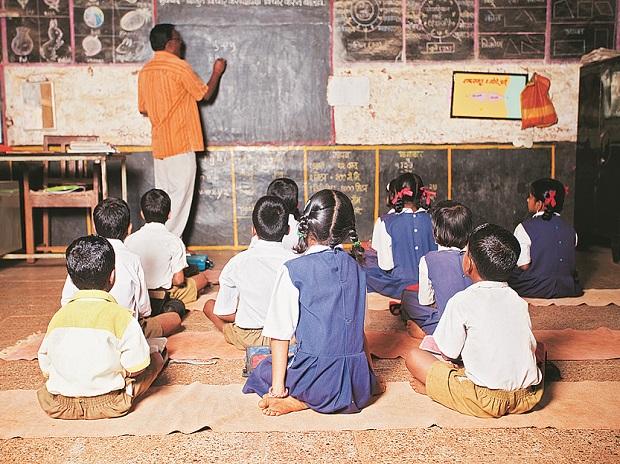
92,275 government schools at both elementary and secondary level have only one teacher to teach all the subjects, Satya Pal Singh, minister of state for human resource development told the Lok Sabha on January 1, 2019.


 1 in every 4 schools in rural India does not have an electricity connection, as per ASER and almost the same number lacks a library. A computer is available only in 21.3% of rural schools.250.53 million children in India are in the age group of 6-15 in 2017, as per government data, and in need of a good education.

Interim Budget 2019 must focus on skilled labour to tackle unemployment

Intrim Budget 2019:

Budgetary allocation to the ministry of skill development and entrepreneurship (MSDE) has witnessed a 237% increase over the last four years, from Rs 1,007 crore (actual expenditure) in 2015-16 to Rs 3,400 crore (budget estimate) in 2018-19, according to ministry data.

The 2018-19 allocation, however, represents a “drastic cut” by the ministry of finance against the Rs 7,696.54 crore requested by the MSDE, due to underutilisation of funds allocated to the MSDE in previous years, revealed a parliamentary committee report in March 2018. The committee warned that the budget cut would “adversely affect various schemes” implemented by the ministry tasked with skilling India’s youth.

In November 2018, the government’s aim to skill 10 million youth under the Pradhan Mantri Kaushal Vikas Yojana (PMKVY, or Prime Minister’s Skill Development programme) by 2020 was found to be 64% short of meeting the target. Just over 3.6 million people had been enrolled in PMKVY by November 30, 2018, government data showed. Among these, 3.39 million had received training and 2.6 million had received certification after training--66% and 74% short of the target, respectively.

There is a direct link between India’s underskilled workforce and high unemployment rates. Unemployment has been a key challenge for the National Democratic Alliance (NDA) government. The unemployment rate for people aged 15 years and above in India was 3.4% in 2013-14, which saw a further increase to 3.7% in 2015-16, according to a government reply to the Lok Sabha on July 23, 2018, which did not provide data on numbers of unemployed.The unemployment rate rose to a four year high (3.9%) in 2016-17, Business Standard reported on January 11, 2019, citing the labour bureau’s sixth annual employment-unemployment survey...Read More