Showing posts with label North America. Show all posts

Wednesday, May 22, 2019

In middle of trade war, America's largest port gets ready for robots

International News

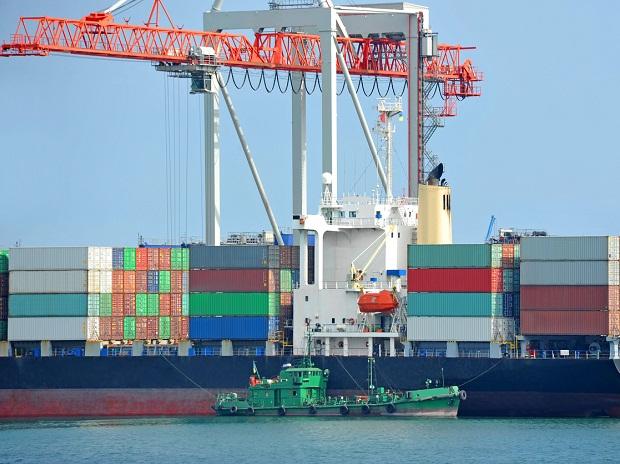
Pier 400 in Los Angeles is North America’s largest shipping terminal. More than 1,700 trucks pass through, on average per day, even in the middle of the U.S.-China trade war. All that cargo translates into thousands of miles driven within the facility each day, mostly by diesel vehicles, spewing pollutants.
For APM Terminals, the part of global shipping company A.P. Moller-Maersk A/S that runs the Los Angeles terminal, the future of cargo handling looks like the future of driving: electric motors replacing gasoline engines, autonomous software replacing human workers. The company says the changes are necessary to meet California rules requiring container terminals to reach zero emissions by 2030 and to keep business from leaving for other coasts.
The Los Angeles terminal has already ordered an electric, automated carrier from Finnish manufacturer Kalmar, part of the Cargotec Corp., that can fulfill the functions of three kinds of manned diesel vehicles: a crane, top-loader and truck. With enough of those, APMT could eliminate 65,000 miles driven daily by diesel trucks and cranes.
There would be fallout, though. The move to a robotic, emission-free operation may cut the need for workers such as Anthony Armijo, a part-timer who has spent 15 years picking up leftover dock shifts. “I just don’t understand what we’re going to be doing in the future,” he said. “I’m an American citizen. You would think they would have a way for us to make a living.”

 The International Longshore and Warehouse Union, which represents dockworkers across the West Coast, has gathered support from local, state and federal politicians for its effort to prevent the municipal board running the port from letting the company proceed with its plans. Los Angeles Mayor Eric Garcetti, who has set his own emissions targets as part of his Green New Deal, is brokering negotiations for a deal this month.

Friday, April 12, 2019

Factbox: How Uber and Lyft compare on key financial metrics

Company News
Uber Technologies Inc's initial public offering filing on Thursday contains data that will be key to selling itself to investors. The share sale follows a public offering by rival ride-sharing service Lyft Inc last month, whose shares have dropped to about $61 from an IPO price of $72.
Here are how the two companies compare on key metrics from Uber's filing

REVENUE

Uber had $11.3 billion in 2018 vs Lyft $2.2 billion.Uber's growth has been slowing relative to Lyft due to scandals and aggressive discounting by Lyft.Lyft's revenue more than doubled between 2017 and 2018 while Uber's grew around 41 percent.

MARKET SHARE

Uber has lost market share but remains the leader.Uber has 65 percent share in North America while Lyft says it has 39 percent in the United States.

ADJUSTED EBITDA

Both Uber and Lyft lose money though Uber has trimmed its losses in recent years.Uber's adjusted loss before interest, taxes, depreciation and amortisation was just over $1.8 billion in 2018 compared to $2.6 billion in 2017.Lyft lost $950 million in 2018 on the same basis.

MONTHLY ACTIVE USERS


 Uber has 91 million monthly active users compared to Lyft's 18.6 million.Uber's number includes customers of additional services beyond ride sharing.(Only the headline and picture of this report may have been reworked by the Business Standard staff; the rest of the content is auto-generated from a syndicated feed.)

Thursday, February 21, 2019

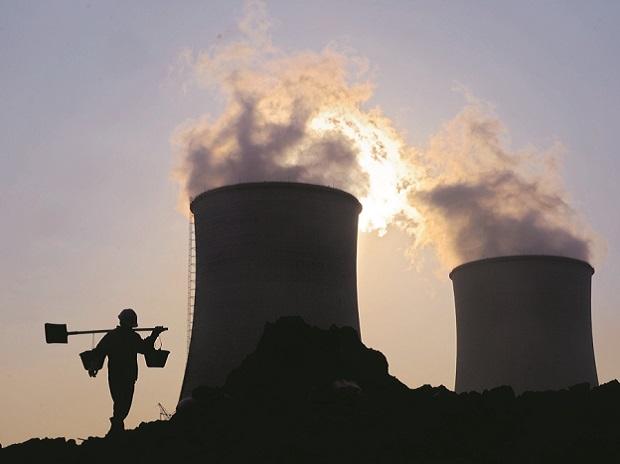
India's coal power plants unhealthiest, should be upgraded or shut: Study

Current Affairs:

China and the US may be the largest producers of coal power, but power plants in India take the highest toll in the world when it comes to health, a global study claims.
Coal-fired power plants produce more than just carbon dioxide, which contributes to global warming, said researchers from ETH Zurich in Switzerland.

Coal burning also releases particulate matter, sulphur dioxide, nitrogen oxide and mercury -- thus damaging the health of many people around the world, they said.
To estimate where action is most urgently required, the researchers modelled and calculated the undesired side effects of coal power for each of the 7,861 power plant units in the world.

The results, published in the journal Nature Sustainability, show that China and the US are the two largest producers of coal power, but power plants in India take the highest toll in the world when it comes to health.

Central Europe, North America and China all have modern power plants, but Eastern Europe, Russia and India still have many older power plants equipped with insufficient flue gas treatment, said Stefanie Hellweg from ETH Zurich's Institute of Environmental Engineering, who led the study.
As a result, these power plants only remove a fraction of the pollutants -- while also often burning coal of inferior quality.


 "More than half of the health effects can be traced back to just one-tenth of the power plants. These power plants should be upgraded or shut down as quickly as possible," said Christopher Oberschelp, the lead author of the study.