Showing posts with label Russia. Show all posts

Tuesday, March 29, 2022

Russia says it will drastically cut military activity near Kyiv, Chernihiv


Russia's military said on Tuesday it would fundamentally" cut back operations near Ukraine's capital and a northern city, potentially a significant concession by Moscow since it invaded its neighbour more than a month ago.

Deputy Defense Minister Alexander Fomin said the move was meant to increase trust in talks aimed at ending fighting, as negotiators met face-to-face after several rounds of failed negotiations. But Russia's troops have been bogged down and struggling to make major advances recently.

The talks in Istanbul raised flickering hopes there could be progress toward ending a war that has ground into a bloody campaign of attrition. Fomin said Moscow had decided to fundamentally ... cut back military activity in the direction of Kyiv and Chernihiv to increase mutual trust and create conditions for further negotiations."

Ukraine's military said it had noted withdrawals around Kyiv and Chernihiv, though the Pentagon said it could not corroborate the reports.

An adviser to the Ukrainian president said the meeting in Istanbul was focused on securing a cease-fire and guarantees for Ukraine's security issues that have been at the heart of previous unsuccessful negotiations.

Thursday, March 17, 2022

Accenture posts strong Q2, warns of potential impact from Ukraine conflict


IT consulting firm Accenture Plc said on Thursday its operations could be adversely impacted if the Russia-Ukraine conflict escalates, as the sanctions on Moscow increase the level of economic and political uncertainty. Accenture forecast third-quarter revenue above Wall Street estimates, but it excluded the impact of the war. The company said its forecast did not include "assumptions for a significant escalation or expansion of economic disruption or the conflict's current scope." Shares of the Dublin, Ireland-based company rose nearly 5% in premarket trading.

The stock has fallen nearly 22% so far this year. Earlier this month, Accenture said it was discontinuing business in Russia in response to the country's invasion of Ukraine. The company's revenue in Russia stood at $120 million during fiscal 2021. New bookings for the second quarter stood at $19.6 billion, lifted by demand for its cloud and security-related services as more businesses transform to hybrid work model. Analysts have also suggested that the enterprise software markets that include players such as Oracle and Salesforce are showing more positive trends in client spending. Revenue for the second quarter stood at $15.05 billion, compared with analysts' average estimate of $14.65 billion, according to Refinitiv IBES data. Accenture, whose clients include more than three-quarters of the Fortune Global 500 companies across communications, media & technology as well as financial services industries, is also strategically investing in cloud, acquisitions and partnerships to gain more market share.

Friday, March 11, 2022

Putin says Russia to welcome volunteers from Middle East to fight Ukraine


Russian President Vladimir Putin gave the green light on Friday to bring in thousands of fighters from the Middle East to fight against Ukraine. At a meeting of Russia's Security Council, Defence Minister Sergei Shoigu said there were 16,000 volunteers in the Middle East who were ready to come to fight with Russian-backed forces in the breakaway Donbass region of eastern Ukraine. "If you see that there are these people who want of their own accord, not for money, to come to help the people living in Donbass, then we need to give them what they want and help them get to the conflict zone," Putin said. Shoigu also proposed that Western-made Javelin and Stinger missiles that were captured by the Russian army in Ukraine should be handed over to Donbass forces.

"As to the delivery of arms, especially Western-made ones which have fallen into the hands of the Russian army - of course I support the possibility of giving these to the military units of the Lugansk and Donetsk people's republics," Putin said. "Please do this," he told Shoigu. Russia invaded Ukraine on Feb. 24 soon after Putin recognised the breakaway territories as independent states, in an action condemned internationally as illegal. Russia says its "special military operation" in Ukraine was a forced response to what it calls genocide by Ukraine against Russian-speakers in the east of the country - a pretext rejected by Kyiv and the West as baseless war propaganda. Shoigu said the Russian military planned to strengthen its Western border after what he said was an increase in Western military units on Russia's border

Monday, March 9, 2020

Goldman Sachs cuts Brent forecasts to $30 on price war, Coronavirus impact

Current Affairs
Goldman Sachs cut its second-and second from last quarter Brent value gauges to $30 per barrel, refering to the oil value war among Russia and Saudi Arabia and a huge breakdown in oil request due to the coronavirus that has killed more than 3,500 universally.
Oil fell by the most since 1991 on Monday after Saudi Arabia began a value war with Russia by cutting its selling costs and vowing to release its repressed stock onto a market reeling from falling interest on account of the infection episode.
"The forceful slice to Saudi's Official Selling Prices and Russia's hesitance to be driven into an arrangement on Friday point to a low likelihood of a prompt (OPEC+) understanding," Goldman said in a note dated March 8.
A three-year agreement between the Organization of the Petroleum Exporting Countries (OPEC) and Russia finished in bitterness on Friday after Moscow would not bolster further oil cuts and OPEC reacted by expelling all cutoff points on its own creation. "While we can't preclude an OPEC+ bargain in coming months, we additionally accept that this understanding was naturally imbalanced and its creation cuts financially unwarranted," the bank said.
Goldman's base case is presently for no such arrangement, it said.
Lower oil costs will begin making intense budgetary pressure and declining creation from shale just as other significant expense maker, the bank said.

There will be a unimportant reaction from U.S. shale makers in the subsequent quarter, yet yield will fall in the second from last quarter by 75,000 barrels for every day (bpd) and a further 250,000 bpd in the final quarter of 2020, the bank said....Read More

Thursday, September 19, 2019

Trump backs severe sanctions, says many options short of war for Iran

International News
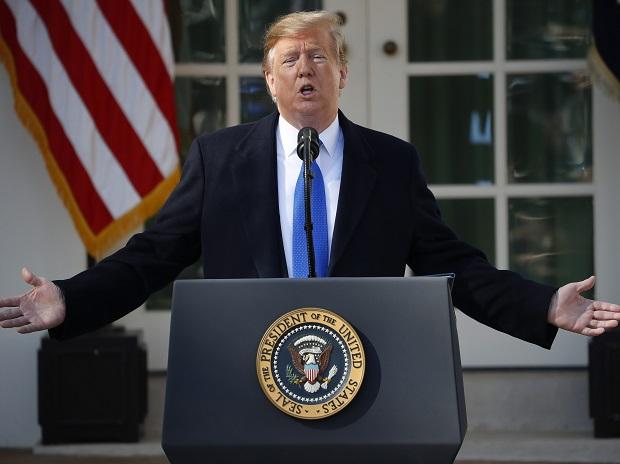
US President Donald Trump said on Wednesday there were many options short of war with Iran after US ally Saudi Arabia displayed remnants of drones and missiles it said were used in a crippling attack on its oil sites that was "unquestionably sponsored" by Tehran.
"There are many options. There's the ultimate option and there are options that are a lot less than that. And we'll see," Trump told reporters in Los Angeles. "I'm saying the ultimate option meaning go in -- war."
The president struck a cautious note as his Secretary of State Mike Pompeo, during a visit to Saudi Arabia, described the attacks as "an act of war" on the kingdom, the world's largest oil exporter.Trump said on Twitter that he had ordered the U.S. Treasury to "substantially increase sanctions" on Iran, which denies carrying out the attacks, and told reporters the unspecified, punitive economic measures would be unveiled within 48 hours.
Trump's tweet followed repeated U.S. assertions that the Islamic Republic was behind Saturday's attacks and came hours after Saudi Arabia said the strike was a "test of global will".Iran again denied involvement in the Sept. 14 raids, which hit the world's biggest crude oil processing facility and initially knocked out half of Saudi output. Saudi Arabia is the world's leading oil exporter.
Responsibility was claimed by Yemen's Iran-aligned Houthi group, which on Wednesday gave more details of the raid, saying it was launched from three sites in Yemen.

 In a remark that may further strain a tense political atmosphere in the Gulf, the Houthis said they had listed dozens of sites in the United Arab Emirates, Riyadh's top Arab ally, as possible targets for attacks...Read More

Monday, April 22, 2019

RBI committee to peg excess capital at Rs 3 trillion, says BofAML

Economy News

A panel named by the Reserve Bank of India (RBI) to study its capital structure is likely to identify excess reserves of up to Rs 3 trillion, or 1.5 per cent of gross domestic product (GDP), according to Bank of America Merrill Lynch (BofAML).

The view from BofAML lends itself to a debate over the RBI’s reserves, with one school of thought believing that the monetary authority holds surplus capital that can be handed over to the government and the other saying the RBI has insufficient reserves.

BofAML’s note comes as the panel led by former governor RBI Bimal Jalan prepares to submit its report in the coming weeks. While finance ministry officials have supported transfer of surplus reserves to help the government meet budget goals, a central bank-backed thinktank found that the RBI’s capital buffer that’s below the global average capital to asset ratio.

“Our stress tests throw up a range of one trillion rupees plus only from contingency reserves," Indranil Sen Gupta, chief India economist at BofAML, said in the note.

According to him, the RBI maintains higher contingency reserves as a percentage of its total book compared to its peers in Brazil, Russia and South Africa and a lower cap will release more funds.
As such, if the cap is halved to 3.25 per cent from 6.25 per cent, currently, that will release Rs 1.3 trillion, Sen Gupta added.


 Along with revaluation gains, which range from Rs 3 billion to Rs 1.8 trillion, the RBI would be in a position to transfer the excess reserves to the government, which can be used to recapitalise the country’s struggling state-run banks, he said.

Tuesday, February 26, 2019

De-escalatory diplomacy: Can Trump administration avert an India-Pak war?

Current Affairs:

So far, Donald Trump has had remarkably good luck: His administration has avoided a major international crisis not of its own creation. That luck has run out, however, with a deadly dispute between India and Pakistan. In previous showdowns on the subcontinent, the US played a critical role in preventing tensions between nuclear-armed rivals from getting out of control. We are about to find out whether an erratic, hollowed-out Trump administration is capable of a similar performance.

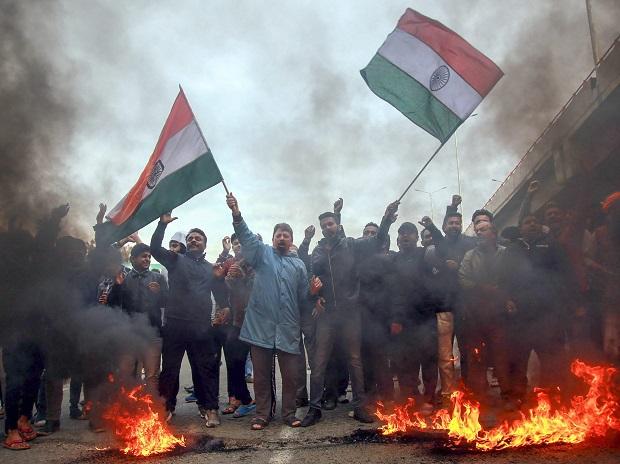
India-Pakistan tensions over the disputed area of Kashmir have persisted since the birth of the two nations in 1948. The current crisis broke when Pakistani militants carried out the suicide bombing of an Indian security convoy, killing more than 40 Indian troops. After more than a week of threats and counter-threats, Indian planes have bombed suspected militant camps on the Pakistani side of the so-called Line of Control — the first time Indian forces had carried out strikes on the Pakistani side in decades.

Although the amount of damage caused is unclear, the bombings raised concerns that Pakistan will feel compelled to respond militarily. The potential escalatory implications are severe — both countries have nuclear weapons, and Pakistani doctrine reportedly emphasizes using them early in a war with India due to its conventional military disadvantages.

Given the grave dangers of an India-Pakistan war — as well as recent Pakistani threats that it might respond to an Indian assault by derailing the peace talks in Afghanistan — the US has a clear interest in calming things down. In prior confrontations, in fact, American diplomacy has been vital to walking India and Pakistan back from the brink.


 During the Kargil War — a limited but fierce military conflict high in the mountains over Kashmir in 1999 — President Bill Clinton used personal diplomacy to convince Pakistani leaders to pull their fighters back from confrontation with Indian troops...Read More

Thursday, February 21, 2019

India's coal power plants unhealthiest, should be upgraded or shut: Study

Current Affairs:

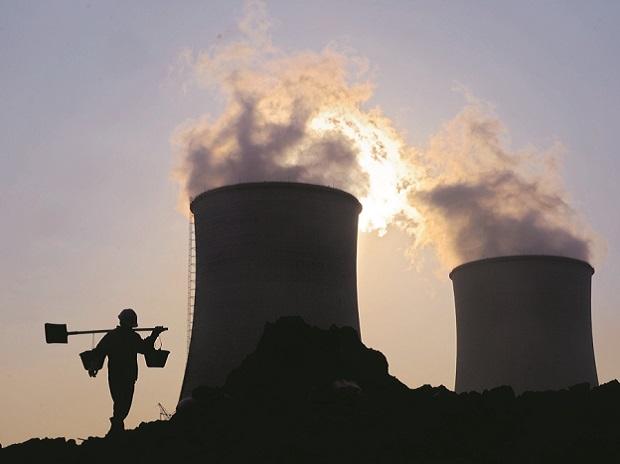
China and the US may be the largest producers of coal power, but power plants in India take the highest toll in the world when it comes to health, a global study claims.
Coal-fired power plants produce more than just carbon dioxide, which contributes to global warming, said researchers from ETH Zurich in Switzerland.

Coal burning also releases particulate matter, sulphur dioxide, nitrogen oxide and mercury -- thus damaging the health of many people around the world, they said.
To estimate where action is most urgently required, the researchers modelled and calculated the undesired side effects of coal power for each of the 7,861 power plant units in the world.

The results, published in the journal Nature Sustainability, show that China and the US are the two largest producers of coal power, but power plants in India take the highest toll in the world when it comes to health.

Central Europe, North America and China all have modern power plants, but Eastern Europe, Russia and India still have many older power plants equipped with insufficient flue gas treatment, said Stefanie Hellweg from ETH Zurich's Institute of Environmental Engineering, who led the study.
As a result, these power plants only remove a fraction of the pollutants -- while also often burning coal of inferior quality.


 "More than half of the health effects can be traced back to just one-tenth of the power plants. These power plants should be upgraded or shut down as quickly as possible," said Christopher Oberschelp, the lead author of the study.

Tuesday, February 12, 2019

'Huge fail': Twitter CEO says not done enough to protect victims of abuse

Companies News:

Twitter Inc Chief Executive Jack Dorsey said that Silicon Valley companies, including his own, have not done enough to protect victims of online abuse, calling it a "huge fail."

Interviewed via Twitter by Kara Swisher, co-founder of the tech news site Recode, Dorsey tweeted that he would give himself a 'C' grade for what Swisher termed "tech responsibility."
"We've made progress, but it has been scattered and not felt enough," he tweeted in response to Swisher's questions. "Changing the experience hasn't been meaningful enough. And we've put most of the burden on the victims of abuse (that's a huge fail)."

Twitter, along with online social media network Facebook Inc, has faced criticism for abusive posts, fake users and inaccurate news stories on its service. The company has been investing heavily to improve what Dorsey has described as the "collective health" of Twitter.

Dorsey said he does not like how Twitter tends to incentivise outrage, short-term thinking, echo chambers, and fragmented conversations, and that the lack of diversity in the company has not helped in combating such problems.

He said Twitter's work against "automations and coordinated campaigns," along with its collaboration with various government agencies, has left it in a better position to combat the threat of misinformation for the 2020 U.S. presidential elections.


 U.S. intelligence agencies have concluded that Russia used social media during the 2016 U.S. elections to sway voters. Moscow denies that charge.