Showing posts with label America. Show all posts

Monday, September 9, 2019

US, Taliban keep open door to talks after Donald Trump scraps summit

International News

The United States and Afghanistan's Taliban on Sunday both left the door open to fresh talks after President Donald Trump abruptly cancelled a secret summit, but the insurgents threatened to inflict greater costs.
Washington also said it would not relent in fighting the militants after Trump blamed the scuttling of the unprecedented meeting on a Taliban attack that killed a US soldier.
Trump said he had invited Taliban leaders and Afghan President Ashraf Ghani for talks Sunday at the Camp David presidential retreat on a draft deal that would see the United States withdraw thousands of troops and wind down its longest-ever war.
In a series of television interviews, Secretary of State Mike Pompeo did not rule out a return to talks but said the United States needed a "significant commitment" from the Taliban.
"I'm not pessimistic," Pompeo told NBC. "I've watched the Taliban do things and say things they've not been permitted to do before." "I hope it's the case the Taliban will change their behaviour, will recommit to the things that we've been talking to them about for months," he said on ABC.
"In the end, this will be resolved through a series of conversations," he added, urging the Taliban to drop their long-running refusal to negotiate with Ghani's internationally recognized government.

 He said that Trump had not decided whether to go ahead with a withdrawal, which under the draft deal would pull 5,000 of the roughly 13,000 US troops from Afghanistan next year.But Pompeo warned that the United States was "not going to reduce the pressure" on the Taliban, saying US forces had killed more than 1,000 insurgents in the past 10 days alone...Read More


Wednesday, May 29, 2019

Glycine from India, China hurting US biz, anti-dumping duty to be issued

International News

Import of glycine from India, China and Japan is hurting the US industry as the product is sold at less than fair value in America, a federal trade body has claimed.
The United States International Trade Commission (USITC) said it had determined the US industry was materially injured by imports of glycine from India and Japan.
It also determined that glycine was sold in the US at less than fair value and imports that are subsidised by the governments of China and India.
As a result of the USITC's affirmative determinations, US Department of Commerce will issue antidumping duty orders on imports of this product from India and Japan and countervailing duty orders on imports of it from China and India, an official statement said on Wednesday.
USUITC Chairman David Johanson and Commissioners Irving Williamson, Meredith Broadbent, Rhonda Schmidtlein and Jason Kearns voted in the affirmative, according to an official statement.
US import of glycine from China, India, and Japan in 2017 was valued USD 18.6 million. Its import from Thailand was USD 4.6 million and from all other sources was USD 480,000.China, India, Japan and Thailand are the leading source of import of glycine.

 Glycine, also known as aminoacetic acid, is a nonessential amino acid. The organic chemical is produced naturally by humans and other organisms as a building block for proteins.Commercial production of glycine uses traditional chemical synthesis. Glycine is commonly sold in its dry form as a white, free flowing powder.Available in various grades, glycine is used in industrial applications, as well as pharmaceutical and food applications.

Wednesday, May 22, 2019

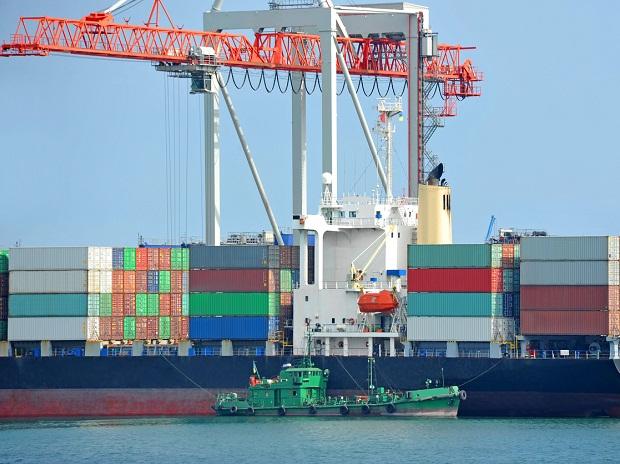
In middle of trade war, America's largest port gets ready for robots

International News

Pier 400 in Los Angeles is North America’s largest shipping terminal. More than 1,700 trucks pass through, on average per day, even in the middle of the U.S.-China trade war. All that cargo translates into thousands of miles driven within the facility each day, mostly by diesel vehicles, spewing pollutants.
For APM Terminals, the part of global shipping company A.P. Moller-Maersk A/S that runs the Los Angeles terminal, the future of cargo handling looks like the future of driving: electric motors replacing gasoline engines, autonomous software replacing human workers. The company says the changes are necessary to meet California rules requiring container terminals to reach zero emissions by 2030 and to keep business from leaving for other coasts.
The Los Angeles terminal has already ordered an electric, automated carrier from Finnish manufacturer Kalmar, part of the Cargotec Corp., that can fulfill the functions of three kinds of manned diesel vehicles: a crane, top-loader and truck. With enough of those, APMT could eliminate 65,000 miles driven daily by diesel trucks and cranes.
There would be fallout, though. The move to a robotic, emission-free operation may cut the need for workers such as Anthony Armijo, a part-timer who has spent 15 years picking up leftover dock shifts. “I just don’t understand what we’re going to be doing in the future,” he said. “I’m an American citizen. You would think they would have a way for us to make a living.”

 The International Longshore and Warehouse Union, which represents dockworkers across the West Coast, has gathered support from local, state and federal politicians for its effort to prevent the municipal board running the port from letting the company proceed with its plans. Los Angeles Mayor Eric Garcetti, who has set his own emissions targets as part of his Green New Deal, is brokering negotiations for a deal this month.

Tuesday, April 30, 2019

China's prowess in AI is making US nervous; can it win from tech cold war?

Current Affairs

China’s growing technological prowess in areas such as artificial intelligence is making Washington very nervous. US efforts to fight back, though, could make the problem worse.

In US policy circles, suspicion of China is starting to resemble a new Red Scare. Universities are heightening scrutiny of research proposals from China and, in some cases, restricting collaboration. Chinese scientists’ visas are being delayed for conferences and exchanges. Visas for Chinese graduate students studying topics such as robotics or advanced manufacturing have been shortened to one year from five.

Last week, the M.D. Anderson Cancer Center in Houston kicked out three senior researchers of Chinese ethnicity after the US National Institutes of Health said they had potentially violated disclosure and confidentiality rules. Workers at various technology companies have been charged with stealing trade secrets in recent months.

More formal rules are coming. After President Donald Trump signed the Export Control Reform Act last year, the US put in place new policies to restrict Chinese investment in American high-tech companies. It also began a process of reexamining export controls on sensitive “emerging and foundational” technologies. That process is nearly complete: The Commerce Department’s Bureau of Industry and Security is holding seminars over the next few months to help companies understand how to comply with the tighter restrictions.


 While the details are still murky, one thing is clear about the new rules: Like the old ones, they’ll apply not just to hardware shipped overseas, or even software and algorithms. They will cover individuals and ideas as well.The disclosure of proprietary information or controlled information to a foreign national, even within the US, triggers the need for an export review process...Read More

Monday, April 29, 2019

Can't hide if an F-16 is shot down, says Pakistan; rejects India's claim

Current Affairs

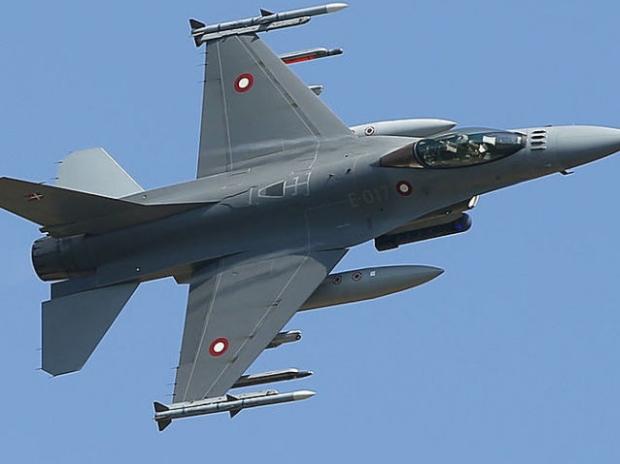
Pakistan Army on Monday once again rejected India's claim of shooting down a Pakistani F-16 fighter jet, saying one cannot hide if a plane is downed in today's age when even if a motorcycle crashes the world finds out.
India has asserted that an Indian Air Force MIG-21 shot down an American-made F-16 on February 27 during the aerial confrontation, a day after Indian fighter jets bombed a JeM terror camp in Balakot, Pakistan.
Pakistan, however, has consistently denied the Indian Air Force's claim, saying none of its aircraft was shot down during the weeks of tensions between the two nuclear-armed countries.Pakistan also claims to have shot a second Indian Air Force jet during the engagement, a claim India has dismissed.
"We downed two Indian planes in the process, the whole world saw their debris and you [India] still claimed that one of the two planes was ours and one of our own pilots died, as we had initially said that two Indian pilots had been captured, and then said that there was only one. You [India] said that we have changed our statement because one pilot was our own," Pakistan military spokesman Major General Asif Ghafoor told reporters in Rawalpindi.
"We got initial information through the proper channel, then on the ground, I personally found out that only one person had been captured and I sent out the correction myself. How is it that you are ready to accept one of our statement, not the other?" he was quoted as saying by the Dawn newspaper.

 "We have not retaliated because we want peace [...] we asked you [India] to ask America about our F-16s' strength. In this day and age, hiding the downing of a plane is impossible. In this time, even if a motorcycle crashes the world finds out," he added...Read More

Tuesday, April 16, 2019

Trump promoted strategic India-US relations in sustained manner: Report

International News

The Trump administration has worked to make India a more prominent part of its regional strategy, a top American think-tank has said in a report, lauding President Donald Trump for promoting strategic ties with India in a "sustained manner".

Asserting that the Trump administration has maintained the success story of US-India relations initiated by George W Bush, the Council on Foreign Relations (CFR) in its report gives the US President a high B+ grade when it comes to America's ties with India.

The CFR in its special report Trump's Foreign Policy are Better Than They Seem said President Trump "deserves credit for promoting strategic ties with India in a sustained manner".

The Trump administration has worked to make India a more prominent part of its regional strategy. After changing the name of US Pacific Command to US Indo-Pacific Command in May 2018, the United States is now planning its first tri-service exercise with the Indian military, said the report authored by former US Ambassador to India, Robert Blackwill.

President Trump's inclinations, as conveyed through his South Asia strategy, which accords primacy to India; his release of advanced weapons systems, such as unmanned aerial vehicles, for sale to New Delhi; and his decision to treat India on par with NATO allies where strategic technology release is concerned are all viewed as favourable toward India, it said.


The report said that New Delhi has accordingly responded with bold initiatives of its own."Although it has not entirely endorsed the Trump administration's Indo-Pacific strategy, it has applauded the strategy's declared vision of a free and open Indo-Pacific regiona concept first articulated by Japan's Prime Minister Shinzo Abe, with whom Prime Minister Narendra Modi enjoys an exceptionally close relationship," the CFR said.