Showing posts with label Israel. Show all posts

Tuesday, October 29, 2019

WhatsApp sues Israeli firm NSO for spying on journalists, activists

Technology
WhatsApp on Tuesday sued Israeli technology firm NSO Group, accusing it of using the Facebook-owned messaging service to conduct cyberespionage on journalists, human rights activists and others.
The suit filed in a California federal court contended that NSO Group tried to infect approximately 1,400 "target devices" with malicious software to steal valuable information from those using the messaging app.WhatsApp head Will Cathcart said the lawsuit was filed after an investigation showed the Israeli firm's role the cyberattack, despite its denials.
"NSO Group claims they responsibly serve governments, but we found more than 100 human rights defenders and journalists targeted in an attack last May. This abuse must be stopped," Cathcart said on Twitter.The lawsuit said the software developed by NSO known as Pegasus was designed to be remotely installed to hijack devices using the Android, iOS, and BlackBerry operating systems.
The complaint said the attackers "reverse-engineered the WhatsApp app and developed a programme to enable them to emulate legitimate WhatsApp network traffic in order to transmit malicious code" to take over the devices."While their attack was highly sophisticated, their attempts to cover their tracks were not entirely successful," Cathcart said in an opinion piece published in the Washington Post, noting that the investigation found internet-hosting services and accounts associated with NSO.

The suit calls on court to order NSO Group to stop any such attacks and asks for unspecified damages.WhatsApp in May called on users to upgrade the application to plug a security hole that allowed for the injection of sophisticated malware that could be used for spying at the messaging app used by 1.5 billion people around the world...READ MORE

Tuesday, February 26, 2019

De-escalatory diplomacy: Can Trump administration avert an India-Pak war?

Current Affairs:

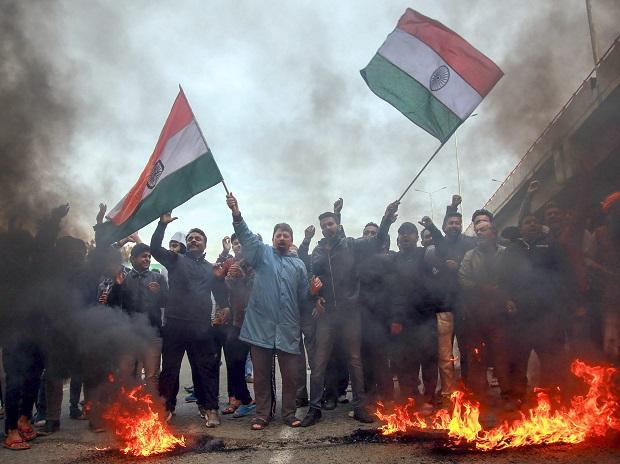
So far, Donald Trump has had remarkably good luck: His administration has avoided a major international crisis not of its own creation. That luck has run out, however, with a deadly dispute between India and Pakistan. In previous showdowns on the subcontinent, the US played a critical role in preventing tensions between nuclear-armed rivals from getting out of control. We are about to find out whether an erratic, hollowed-out Trump administration is capable of a similar performance.

India-Pakistan tensions over the disputed area of Kashmir have persisted since the birth of the two nations in 1948. The current crisis broke when Pakistani militants carried out the suicide bombing of an Indian security convoy, killing more than 40 Indian troops. After more than a week of threats and counter-threats, Indian planes have bombed suspected militant camps on the Pakistani side of the so-called Line of Control — the first time Indian forces had carried out strikes on the Pakistani side in decades.

Although the amount of damage caused is unclear, the bombings raised concerns that Pakistan will feel compelled to respond militarily. The potential escalatory implications are severe — both countries have nuclear weapons, and Pakistani doctrine reportedly emphasizes using them early in a war with India due to its conventional military disadvantages.

Given the grave dangers of an India-Pakistan war — as well as recent Pakistani threats that it might respond to an Indian assault by derailing the peace talks in Afghanistan — the US has a clear interest in calming things down. In prior confrontations, in fact, American diplomacy has been vital to walking India and Pakistan back from the brink.


 During the Kargil War — a limited but fierce military conflict high in the mountains over Kashmir in 1999 — President Bill Clinton used personal diplomacy to convince Pakistani leaders to pull their fighters back from confrontation with Indian troops...Read More

Sunday, February 24, 2019

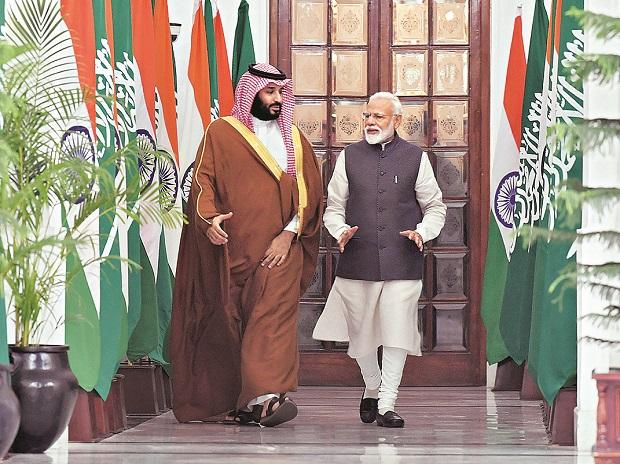
How Saudi Prince's visit to India indicates Modi's West Asia policy success

Economy & Policy:

For a moment leave, aside the immediate context that has overshadowed Crown Prince Mohammed bin Salman’s (MBS’s) visit to New Delhi – the Pulwama attack and its Pakistan connection. The visit has actually been very fruitful and is yet another indicator that Prime Minister Narendra Modi’s West Asia policy remains the one area of achievement in an otherwise indifferent record of foreign policy.
That said, it is important to acknowledge that Modi is building on the legacy of his predecessors – Atal Bihari Vajpayee and Manmohan Singh. Balancing relations with Saudi Arabia, Iran, Israel or Qatar is never easy, but New Delhi has managed to do it with considerable success. Instead of torpedoing legacy, as it did in its relationships with China, Pakistan, or for that matter Nepal, the Modi government has built on it.

In some ways this is brought out by the chief guests that India has had for the Republic Day. In 2003 it was President Mohammed Khatami of Iran, in 2006 it was King Abdullah bin Abdul Aziz al-Saud, and in 2017 it was Crown Prince Mohammed bin Zayed al Nahyan.

The reasons for this are not too far to seek. West Asia or the Middle East is the most important external region for India from the point of view of its security and its economy. It is the closest source of hydrocarbons for a country which needs to import them in considerable amounts. Sixty-three per cent of India’s oil imports are from the region, but equally important is that some seven million Indian nationals work in the Saudi peninsula sending back remittances worth $40 billion to the country.


 The strategy of balancing relations in the region were evident in the Vajpayee period, and the UPA government continued the process. In a remarkable interview, one of the first by an Indian prime minister to a Saudi newspaper, Vajpayee described his policy in this way:...Read More