Showing posts with label Afghanistan. Show all posts

Monday, September 9, 2019

US, Taliban keep open door to talks after Donald Trump scraps summit

International News

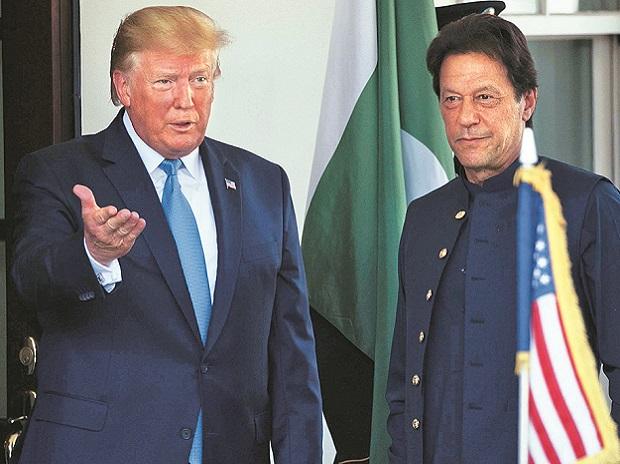
The United States and Afghanistan's Taliban on Sunday both left the door open to fresh talks after President Donald Trump abruptly cancelled a secret summit, but the insurgents threatened to inflict greater costs.
Washington also said it would not relent in fighting the militants after Trump blamed the scuttling of the unprecedented meeting on a Taliban attack that killed a US soldier.
Trump said he had invited Taliban leaders and Afghan President Ashraf Ghani for talks Sunday at the Camp David presidential retreat on a draft deal that would see the United States withdraw thousands of troops and wind down its longest-ever war.
In a series of television interviews, Secretary of State Mike Pompeo did not rule out a return to talks but said the United States needed a "significant commitment" from the Taliban.
"I'm not pessimistic," Pompeo told NBC. "I've watched the Taliban do things and say things they've not been permitted to do before." "I hope it's the case the Taliban will change their behaviour, will recommit to the things that we've been talking to them about for months," he said on ABC.
"In the end, this will be resolved through a series of conversations," he added, urging the Taliban to drop their long-running refusal to negotiate with Ghani's internationally recognized government.

 He said that Trump had not decided whether to go ahead with a withdrawal, which under the draft deal would pull 5,000 of the roughly 13,000 US troops from Afghanistan next year.But Pompeo warned that the United States was "not going to reduce the pressure" on the Taliban, saying US forces had killed more than 1,000 insurgents in the past 10 days alone...Read More

Wednesday, July 24, 2019

Why many children in Afghanistan can no longer afford to attend school

International News

Every day before dawn, 10-year-old Kamran goes to work with his father and other relatives at a brick factory on the outskirts of Kabul.
Like many children in Afghanistan, school is a luxury his family can no longer afford.His father, Atiqullah, supports his family of eight as well as several siblings, nieces and nephews. One of Kamran's uncles is ill and another has passed away, leaving their families in his father's care.
"My children wake up early in the morning and right after prayers they come here for work, so they don't have time for school," said Atiqullah, who like many Afghans has only one name. "These days if you don't work, you cannot survive."The U.S. and its allies have sunk billions of dollars of aid into Afghanistan since the invasion to oust the Taliban 18 years ago, but the country remains mired in poverty.
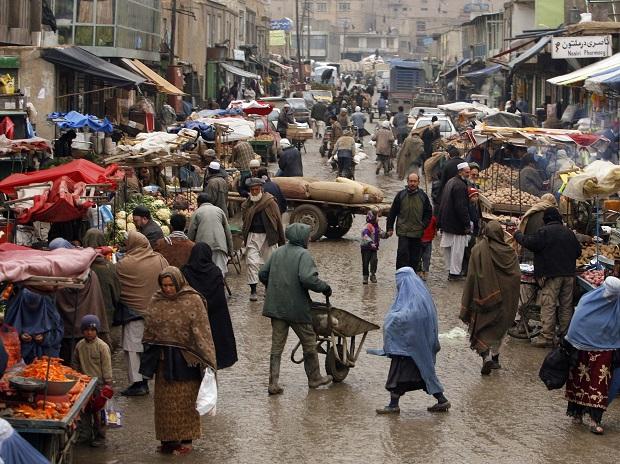
Signs of hardship are everywhere, from children begging in the streets to entire families including children as young as five or six working at brick kilns in the sweltering heat.
Atiqullah's family comes from the eastern Nangarhar province, a stronghold for both the Taliban and an Islamic State affiliate that has seen heavy fighting in recent years.
Brick factory owners travel to the villages and offer loans to cover basic necessities, forcing families to work them off during the summer months in a form of indentured servitude.

Workers say a family of 10 can bring in an average of $12-18 a day, depending on their productivity.Shubham Chaudhuri, who recently completed a three-year stint as the World Bank country director for Afghanistan, said more than half of Afghans live on less than a dollar a day, the amount considered necessary to meet basic needs...Read More

Tuesday, July 23, 2019

'Sandwiched' Pak, two-front dilemma & Afghan-India ties: Imran's worry list

International News

Cautioning the United States about any misadventure against Iran, Pakistani Prime Minister Imran Khan on Tuesday said any action on the lines of Iraq could be much worse and people would forget al-Qaeda.
"My worry about Iran is.... I am not sure whether all the countries realise the gravity of the situation if there is a conflict with Iran," Khan said in response to a question during his appearance at the US Institute of Peace, a think-tank funded by the US Congress.
"You know, this is not going to be the same as (the 2003 US invasion of) Iraq. This could be much, much, much worse.... It could unleash terrorism, which -- people would forget al-Qaeda.... You know, the battle might be quite short if it goes ahead, bombing airfields and so on," he said.
"But the consequences after that, my worry is that not many people fully understand it. And I would strongly urge that there should not be...another military situation," Khan said amidst an escalation of tension between Iran and the US.
"We would do anything, I mean, if (there is) any role Pakistan can play in this. We have already suggested this to Iran," he said.
"Until recently, Iran was willing but then, somehow I felt Iran is getting very desperate. And I do not think they should be pushed into a situation where this leads to a conflict," Khan added.

 Responding to another question on Afghanistan, he said his government had decided to put an end to the decades-old policy of interfering in Afghan politics to avert the danger that Pakistan might someday confront an Afghan-Indian alliance."The fear amongst the Pakistani military establishment was always that there would be a two-front situation...you know, the eastern front, which is India...Read More

Thursday, February 14, 2019

Pak, China share the blame for Pulwama attack but India must introspect to

Current Affairs:

Millions of Indians will by now have seen the twisted wreckage of buses carrying dozens of Indian paramilitary soldiers from the Central Reserve Police Force, or CRPF; at least 40 of them died when a car loaded with explosives rammed into their convoy as it passed through Pulwama district of India’s Jammu and Kashmir state. Jaish-e-Mohammed, a group of militant Islamic extremists who pioneered suicide bombings in the disputed region of Kashmir, claimed responsibility for the attack. As one Kashmiri politician wrote on Twitter, it was “reminiscent of the dark days of militancy pre 2004-05.”

Jaish-e-Mohammed is based in Pakistan. Its leader, Masood Azhar, gives speeches freely and the group has built a sprawling training complex in the city of Bahawalpur, which features a wall painting of suitably militant-looking horses bearing down on Delhi’s Red Fort. Periodically, the Pakistani government pretends to crack down on militant Islamists such as Azhar; in fact, the terrorists continue to raise funds, recruit and strike at will across Pakistan’s borders. Nor is it just India that suffers. The Afghan government tells all and sundry that it cannot defeat the Taliban as long as the militants are supported by Pakistan. Just a day before the Kashmir attack, the Pakistan-based Sunni extremist group Jaish al Adl killed 27 members of Iran’s Revolutionary Guards, also using a car bomb.


 Pakistani officials often like to say that their country is among the foremost victims of Islamist terrorism. Perhaps. But, their response has been at best to accommodate extremism, and at worst to try and convince terrorists that their efforts are best turned outwards, towards India, Afghanistan or Iran. Indian government officials -- like the Afghans -- are caught in a bind. They have little leverage over the militants’ patrons within the Pakistani military establishment. Nor are the Americans any longer influential enough to help: Jaish-e-Mohammed went quiet in the mid-2000s at American insistence but reemerged soon enough.