Showing posts with label Iran. Show all posts

Sunday, June 23, 2019

US cyber forces launched a strike against Iranian military computer systems

508378259

Company News

International retail giant Walmart Thursday agreed to pay over $282 to various US bodies to settle charges of violating anti-corruption regulations while conducting its business in India, China, Brazil and Mexico.
According to the US Security and Exchange Commission (SEC), these violations were conducted by Walmart's third-party intermediaries who made payments to foreign government officials without reasonable assurances that they complied with the Foreign Corrupt Practices Act or FCPA.
SEC has charged Walmart with violating FCPA by failing to operate a sufficient anti-corruption compliance programme for more than a decade as the retailer experienced rapid international growth.Walmart agreed to pay more than $144 million to settle the SEC's charges and approximately $138 million to resolve parallel criminal charges by the Department of Justice for a combined total of more than $282 million, SEC said.
"Walmart valued international growth and cost-cutting over compliance," said Charles Cain, Chief of the SEC Enforcement Division's FCPA Unit."The company could have avoided many of these problems, but instead Walmart repeatedly failed to take red flags seriously and delayed the implementation of appropriate internal accounting controls," he said.
Walmart consented to the SEC's order finding that it violated the books and records and internal accounting controls provisions of the Securities Exchange Act of 1934.

 According to the SEC's order, Walmart failed to sufficiently investigate or mitigate certain anti-corruption risks and allowed subsidiaries in Brazil, China, India, and Mexico to employ third-party intermediaries who made payments to foreign government officials without reasonable assurances that they complied with the FCPA.

Monday, May 20, 2019

US-Iran tensions, Opec's indication of continuing cuts lead to oil surge

International News

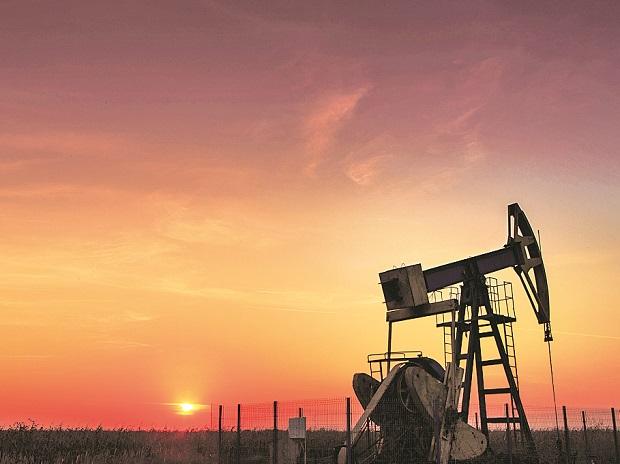
Oil rose to multi-week highs on Monday after Organization of the Petroleum Exporting Countries (Opec) indicated it will likely maintain production cuts that have helped support prices this year, while tensions continued to escalate in the Middle East.

Brent crude was up by 96 cents, or 1.3%, at $73.17 a barrel by 0227 GMT, having earlier touched $73.40, the highest since April 26.

U.S. West Texas Intermediate crude was 82 cents, 1.3%, higher at $63.58 a barrel. The US benchmark reached $63.81 earlier, the highest since May 1.

Saudi Energy Minister Khalid al-Falih said on Sunday there was consensus among the Opec and allied oil producers to drive down crude inventories "gently" but he would remain responsive to the needs of a "fragile market".

United Arab Emirates (UAE) Energy Minister Suhail al-Mazrouei earlier told reporters that producers were capable of filling any market gap and that relaxing supply cuts was not "the right decision".
Meanwhile, US President Donald Trump threatened Tehran on Sunday, tweeting that a conflict would be the "official end" of Iran, while Saudi Arabia said it was ready to respond with "all strength" and that it was up to Iran to avoid war.

The rhetoric follows last week's attacks on Saudi oil assets and the firing of a rocket on Sunday into Baghdad's heavily fortified "Green Zone" that exploded near the US embassy.

 "Al-Falih and the UAE both put paid to suggestions of increasing production over the weekend and then President Trump essentially telling Iran to bring it on, was a perfect short-term storm for oil prices," Greg McKenna, strategist at McKenna Macro, told Reuters by email.

Sunday, February 24, 2019

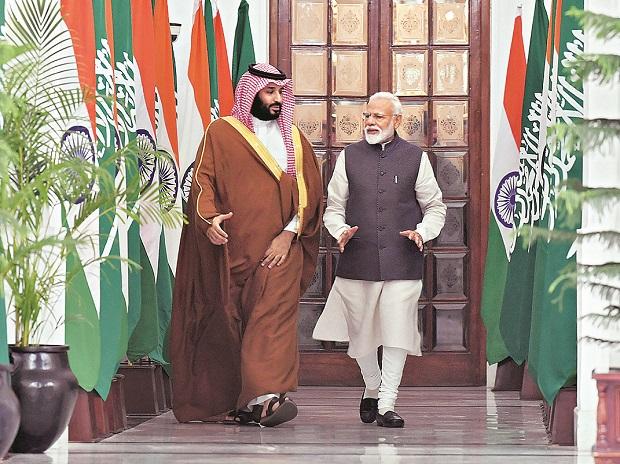
How Saudi Prince's visit to India indicates Modi's West Asia policy success

Economy & Policy:

For a moment leave, aside the immediate context that has overshadowed Crown Prince Mohammed bin Salman’s (MBS’s) visit to New Delhi – the Pulwama attack and its Pakistan connection. The visit has actually been very fruitful and is yet another indicator that Prime Minister Narendra Modi’s West Asia policy remains the one area of achievement in an otherwise indifferent record of foreign policy.
That said, it is important to acknowledge that Modi is building on the legacy of his predecessors – Atal Bihari Vajpayee and Manmohan Singh. Balancing relations with Saudi Arabia, Iran, Israel or Qatar is never easy, but New Delhi has managed to do it with considerable success. Instead of torpedoing legacy, as it did in its relationships with China, Pakistan, or for that matter Nepal, the Modi government has built on it.

In some ways this is brought out by the chief guests that India has had for the Republic Day. In 2003 it was President Mohammed Khatami of Iran, in 2006 it was King Abdullah bin Abdul Aziz al-Saud, and in 2017 it was Crown Prince Mohammed bin Zayed al Nahyan.

The reasons for this are not too far to seek. West Asia or the Middle East is the most important external region for India from the point of view of its security and its economy. It is the closest source of hydrocarbons for a country which needs to import them in considerable amounts. Sixty-three per cent of India’s oil imports are from the region, but equally important is that some seven million Indian nationals work in the Saudi peninsula sending back remittances worth $40 billion to the country.


 The strategy of balancing relations in the region were evident in the Vajpayee period, and the UPA government continued the process. In a remarkable interview, one of the first by an Indian prime minister to a Saudi newspaper, Vajpayee described his policy in this way:...Read More

Thursday, February 14, 2019

Pak, China share the blame for Pulwama attack but India must introspect to

Current Affairs:

Millions of Indians will by now have seen the twisted wreckage of buses carrying dozens of Indian paramilitary soldiers from the Central Reserve Police Force, or CRPF; at least 40 of them died when a car loaded with explosives rammed into their convoy as it passed through Pulwama district of India’s Jammu and Kashmir state. Jaish-e-Mohammed, a group of militant Islamic extremists who pioneered suicide bombings in the disputed region of Kashmir, claimed responsibility for the attack. As one Kashmiri politician wrote on Twitter, it was “reminiscent of the dark days of militancy pre 2004-05.”

Jaish-e-Mohammed is based in Pakistan. Its leader, Masood Azhar, gives speeches freely and the group has built a sprawling training complex in the city of Bahawalpur, which features a wall painting of suitably militant-looking horses bearing down on Delhi’s Red Fort. Periodically, the Pakistani government pretends to crack down on militant Islamists such as Azhar; in fact, the terrorists continue to raise funds, recruit and strike at will across Pakistan’s borders. Nor is it just India that suffers. The Afghan government tells all and sundry that it cannot defeat the Taliban as long as the militants are supported by Pakistan. Just a day before the Kashmir attack, the Pakistan-based Sunni extremist group Jaish al Adl killed 27 members of Iran’s Revolutionary Guards, also using a car bomb.


 Pakistani officials often like to say that their country is among the foremost victims of Islamist terrorism. Perhaps. But, their response has been at best to accommodate extremism, and at worst to try and convince terrorists that their efforts are best turned outwards, towards India, Afghanistan or Iran. Indian government officials -- like the Afghans -- are caught in a bind. They have little leverage over the militants’ patrons within the Pakistani military establishment. Nor are the Americans any longer influential enough to help: Jaish-e-Mohammed went quiet in the mid-2000s at American insistence but reemerged soon enough.