Showing posts with label International News. Show all posts

Tuesday, June 25, 2019

In 'climate apartheid', rich will save themselves while poor suffer: UN

Company News

The world is on course for “climate apartheid”, where the rich buy their way out of the worst effects of global warming while the poor bear the brunt, a UN human rights report said on Tuesday.
The report, submitted to the UN Human Rights Council by its special rapporteur on extreme poverty, Philip Alston, said business was supposed to play a vital role in coping with climate change, but could not be relied on to look after the poor.
“An over-reliance on the private sector could lead to a climate apartheid scenario in which the wealthy pay to escape overheating, hunger, and conflict, while the rest of the world is left to suffer,” he wrote.
He cited vulnerable New Yorkers being stranded without power or healthcare when Hurricane Sandy hit in 2012, while “the Goldman Sachs headquarters was protected by tens of thousands of its own sandbags and power from its generator”.
Relying exclusively on the private sector to protect against extreme weather and rising seas “would almost guarantee massive human rights violations, with the wealthy catered to and the poorest left behind”, he wrote.
“Even under the best-case scenario, hundreds of millions will face food insecurity, forced migration, disease, and death.”
His report criticized governments for doing little more than sending officials to conferences to make “sombre speeches”, even though scientists and climate activists have been ringing alarm bells since the 1970s.

 “Thirty years of conventions appear to have done very little. From Toronto to Noordwijk to Rio to Kyoto to Paris, the language has been remarkably similar as States continue to kick the can down the road,” Alston wrote.


Sunday, June 16, 2019

Nordic banks are getting ready for the future with robots replacing humans

Company News

The two biggest Nordic banks have both recently beefed up their compliance units significantly. Both say the extra headcount is temporary.
Nordea Bank Abp has hundreds of employees who scrutinize billions of transactions in order to catch anything that looks potentially criminal. It’s a costly, inefficient system that Mikael Bjertrup, head of the bank’s financial crime prevention unit, plans to change. Bjertrup says that about 20 per cent of suspicious alerts are currently closed by algorithms, based on machine learning, with the rest still being handled by humans. He wants to see those numbers reversed so that algorithms handle 80 per cent.
“We’ll be fewer people in the future, but our defense will be better,” he said. “We won’t need as many as 1,500 employees in the future, as technology improves.”
The head of compliance at Danske Bank A/S, Philippe Vollot, also says headcount will probably be scaled back once “technology kicks in.”
Insatiable Demand
Compliance has emerged as an area of banking in which the demand for more headcount has so far seemed almost insatiable. The hiring binge at Nordea started in 2015 after it was fined for failing to live up to anti-money laundering requirements. More recently, laundering scandals that engulfed Danske and Swedbank AB have added to pressure on the industry to allocate much bigger resources to fighting financial crime.

 With labor accounting for roughly three-quarters of the cost of complying with anti-money laundering requirements, Nordic banks are figuring out how to replace people with artificial intelligence, algorithms and automated customer screening. They say a key frustration now is that the authorities are struggling to keep up, after banks plowed huge amounts of money into their risk controls.

Monday, May 13, 2019

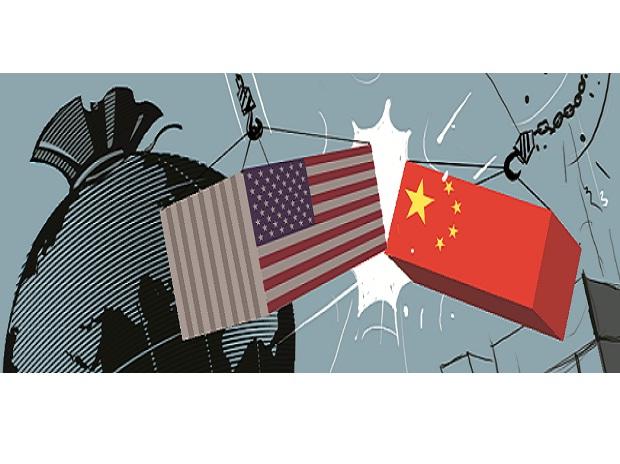
China-US trade war heats up: 3 reasons why it won't cool down anytime soon

International News

The truce in the US-China trade war is in tatters.
China said on May 13 that it will impose new tariffs on a range of American goods in retaliation for President Donald Trump’s decision to raise duties on $200 billion in Chinese imports.

Although trade talks may continue, for now the trade war that Trump began in January 2018 is back on, which will mean more economic pain for companies and consumers in both the US and China.
As an economist who focuses on international trade, I believe there are three reasons the conflict could continue for a long time.

1. Mastering the fundamentals

All evidence suggests that negotiators have made little headway resolving the fundamental disagreements between China and the US.The most pressing issues involve deep structural features of the Chinese economy that China has little incentive – or in some cases, ability – to change. In short, the US believes that the Chinese government has been both too involved and not involved enough in how its economy functions.

The most important and long-standing issue is that the Chinese economy owes part of its rapid development in recent decades to heavy subsidization of targeted companies and industries. The US wants China to be much more transparent about this support and to reduce subsidies overall.


 At the same time, the Chinese government has not been doing enough when it comes to protecting foreign intellectual property in China. Copyright enforcement is still weak, and US companies are forced to transfer technologies to Chinese counterparts as a condition of doing business in the country.

Are Americans retreating into isolation? Here's what this survey reveals

International News

Public attitudes toward US foreign policy are a mess of ambiguities and seeming contradictions. Americans don’t particularly like Donald Trump’s policies, but they share some of his ambivalence about the country’s vast global role.They are not retreating into isolationism, but neither are they persuaded by the traditional justifications for America’s efforts to shape the world.
These are the principal takeaways from a recent opinion survey conducted by the progressive-leaning Center for American progress. For those who believe that American global engagement has been a good thing for the country and the world, the survey provides reason for optimism and pessimism alike. And it highlights the challenges Trump’s successor will face in rebuilding a foreign policy consensus that has frayed badly.
The good news is that Trump’s statecraft — a zero-sum version of nationalism emphasizing military strength, opposition to immigration and skepticism about America’s global responsibilities — is not very popular. Yes, perhaps one-third of the population can be categorized as “Trump nationalists,” but the president’s foreign policy approval rating is an unimpressive 40 per cent.
Americans are not exactly clamoring for more casual belligerence, economic protectionism, diplomatic self-isolation and simple incompetence.They are, however, receptive to some of Trump’s underlying critiques of America’s global project.

 According to CAP, Americans broadly support the idea of making allies take greater responsibility for their own defense. They place greater emphasis on dealing with direct, tangible threats such as terrorism than on confronting more abstract challenges such as geopolitical revisionism in Europe or the Asia-Pacific. They are wary of prolonged wars in the greater Middle East and show limited enthusiasm for promoting democracy.Americans also worry about trade-offs between domestic and global priorities: They are in the mood to spend money on butter rather than guns...Read More

Thursday, May 2, 2019

Berkshire Hathaway finally bought shares of Amazon, says Warren Buffett

International News

Warren Buffett said Berkshire Hathaway Inc has bought shares of internet retailing giant Amazon.com Inc for the first time, though he has not been the one doing the buying, CNBC reported on Thursday.

Buffett said the purchase was made by one of his investment managers, Todd Combs or Ted Weschler, and details would be disclosed later this month in Berkshire's quarterly report of its US stock holdings.The purchase marks a U-turn for Berkshire, where Buffett has long praised the leadership of Amazon Chief Executive Jeff Bezos.

"Yeah, I've been a fan, and I've been an idiot for not buying," Buffett told CNBC.Buffett's assistant did not immediately respond to a request for comment. Amazon did not immediately respond to a similar request.

Shares of companies often rise when Berkshire reveals its support through new stakes, even when the purchases are believed or known to have been made by Combs or Weschler, who together invest about $26 billion.

The initial impetus of the portfolio managers has in the past heralded Buffett's eventual forays into some of their investments, often in big ways.

It was Combs who in 2012 began investing in industrial and aircraft parts maker Precision Castparts Corp. Four years later, Berkshire completed its purchase of that company for $32 billion, in what remains Buffett's largest acquisition.


 More recently, it was either Combs or Weschler who in 2016 began investing in iPhone maker Apple Inc.But it was Buffett who ramped up that stake into Berkshire's largest common stock investment, more than 255 million shares, now worth roughly $53 billion.The Amazon purchase adds an additional bond between Buffett and Bezos, whose companies teamed up last year with JPMorgan Chase & Co to form a new venture, Haven, to reduce employee healthcare costs...Read More

Monday, April 1, 2019

China purchases could undercut Donald Trump's larger trade goal

International News

At the heart of President Trump’s negotiations with China is a troubling contradiction: The United States wants to use the trade talks to encourage the country to adopt a more market-oriented economy. But a key element of a prospective deal may end up reinforcing the economic power of the Chinese state.

Negotiators are still working out deal terms, but any agreement seems certain to involve China’s promise to purchase hundreds of billions of dollars of American goods. For Mr. Trump, this is an essential element that will help reduce the United States’ record trade deficit with China and bolster farmers and other constituencies hurt by his trade war.

But those purchases will be ordered by the Chinese state, and most will be carried out by state-controlled Chinese businesses, further cementing Beijing’s role in managing its economy and potentially making United States industries even more beholden to the Chinese.

“It seems like those types of really simplistic purchasing commitment type of arrangements would actually reinforce state ownership rather than discourage it,” said Rufus Yerxa, the head of the National Foreign Trade Council, which represents the United States’ largest exporters.

After months of talks, the two sides are inching closer to an agreement. Robert Lighthizer, Mr. Trump’s top trade negotiator, and Steven Mnuchin, the Treasury secretary, discussed the remaining sticking points with their Chinese counterparts on Thursday evening and Friday in Beijing. Mr. Mnuchin, in a tweet on Friday, said the talks had been “constructive.”


 Both sides are trying to iron out an agreement by this week, to coincide with a visit to Washington by Liu He, the Chinese special envoy charged with negotiating the deal...Read More

Mark Zuckerberg's call to regulate Facebook, explained

International News

Facebook has faced months of scrutiny for a litany of ills, from spreading misinformation to not properly protecting its users’ data to allowing foreign meddling in elections.
Many at the Silicon Valley company now expect lawmakers and regulators to act to contain it — so the social network is trying to set its own terms for what any regulations should look like.
That helps explain why Mark Zuckerberg, Facebook’s chief executive, wrote an opinion piece for The Washington Post on Saturday laying out a case for how he believes his company should be treated.

In his post, Mr. Zuckerberg discussed four policy areas — harmful content, election integrity, privacy and data portability — which he said the government should focus attention on.
Here’s an annotated analysis of Mr. Zuckerberg’s post and what he is seeking to do with each area.

Harmful content

First, harmful content. Facebook gives everyone a way to use their voice, and that creates real benefits — from sharing experiences to growing movements. As part of this, we have a responsibility to keep people safe on our services. That means deciding what counts as terrorist propaganda, hate speech and more. We continually review our policies with experts, but at our scale we'll always make mistakes and decisions that people disagree with.


 So-called harmful content across Facebook is an enormous category, spanning abuse and bullying to the recent live-streamed shootings at two mosques in New Zealand...Read More

Wednesday, March 27, 2019

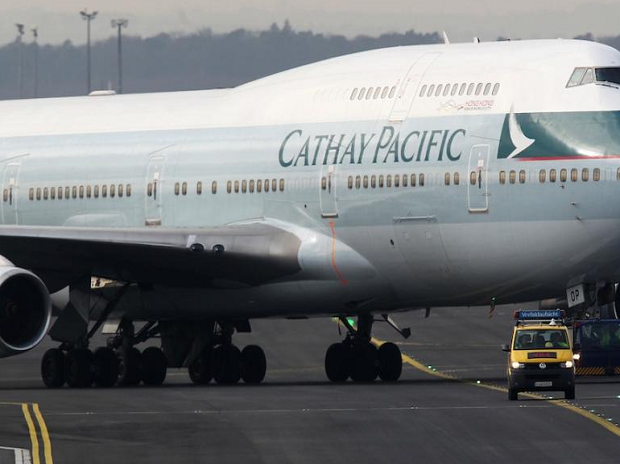
Cathay Pacific to buy HK Express for $628 mn, enter budget airline segment

International News

Cathay Pacific Airways said on Wednesday it had agreed to buy Hong Kong Express Airways Ltd from cash-strapped Chinese conglomerate HNA Group for HK$4.93 billion ($628 million), giving it a foothold in the fast-growing budget travel market.

A lack of slots at Hong Kong International Airport until an expansion is completed in 2024 had constrained Cathay's ability to follow peers like Singapore Airlines Ltd and Qantas Airways Ltd and set up its own budget brand.

Cathay said it would continue operating HK Express as a standalone carrier using a low-cost business model.

The purchase price comprises HK$2.25 billion of cash and HK$2.68 billion of non-cash consideration through promissory loan notes, Cathay said in an statement to the Hong Kong Stock Exchange. The transaction was expected to be completed on or before Dec. 31, it added.

HK Express reported a HK$141 million net loss in 2018 and had a net asset value of HK$1.12 billion, Cathay said.

Cathay shares rose 3.4 per cent in early trade on Wednesday, outpacing a 0.1 per cent gain in the benchmark Hang Seng Index.

"It seems like a good deal given the value of the slots and the strategic importance of fast-tracking a low-cost carrier, multi-brand strategy and preventing a competitor from making a move in its home market," CAPA Centre for Aviation Chief Analyst Brendan Sobie said.

 "But a proper valuation is hard to figure out given the debts and complex structure of the HNA Group.

Tuesday, March 26, 2019

Ogossagou massacre: Mali President vows security beef-up as toll hits 160

International News

Malian President Ibrahim Boubacar Keita vowed Monday to beef up security as he visited a village where more some 160 people were killed by suspected militiamen from a rival ethnic group.

"We need security here -- this is your mission," Keita said, giving a public order to military chief General Aboulaye Coulibaly, who was abruptly appointed on Sunday after the massacre.

"Justice will be done," he vowed.

The deadly raid took place on Saturday in the village of Ogassogou, home to the Fulani herding community, near the town of Mopti in central Mali.

A militia from the Dogon ethnic group -- a hunting and farming community with a long history of tension with the Fulani over access to land -- is suspected to have carried out the raid.

State television ORTM on Sunday gave a "provisional toll" of 136 dead. Late Monday a local official and a Mali security force source said the toll had risen to 160 and could rise further.

"The new count is 160 dead and it will probably be higher still," local councillor Amadou Diallo told AFP, denouncing an attack he said amounted to "ethnic cleansing."

An AFP reporter on Monday said many homes in the village had been burned down and the ground was littered with corpses.

"I have never seen anything like that. They came, they shot people, burned homes, killed the babies," said 75-year-old survivor Ali Diallo.


 The perpetrators "are not jihadists. They are traditional hunters," a health worker told AFP...Read More

Monday, March 11, 2019

Does Xi Jinping trust Trump enough to get on a plane and seal trade deal?

International News

Donald Trump regularly touts the strength of his personal relationship with Xi Jinping, talking about the Chinese leader in the sort of warm terms US presidents normally reserve for longstanding allies.
Yet as the world’s two largest economies inch towards a trade agreement designed to define and reorder their economic relationship for years to come, one question looms large: Does Xi trust Trump enough to get on a plane and seal the deal?

Trump and his aides have for weeks been pushing for Xi to agree to a meeting at Mar-a-Lago, the president’s club and resort in Palm Beach, Florida, to finalize a deal as soon as this month to end a dispute that has cast a shadow over the global economy. Trump himself has said that it’s only when the two leaders meet that the final details can be ironed out.

Chinese officials, however, have long been wary of putting Xi in a position where he might be embarrassed by an unpredictable Trump or forced into last-minute concessions.

“That is the real conundrum for Xi,’’ said Eswar Prasad, an expert on the Chinese economy at Cornell University who regularly meets with senior officials in Beijing. “The concern about being snookered by Trump at the negotiating table is a real risk for Xi.’’


 China’s worries are flipping the U.S. script on its head. As he claims to be the first American president to stand up to Beijing, his aides have built a possible deal on a foundation of distrust. In their view, a China that has for decades lied and cheated its way to economic success cannot be trusted to live up to any commitments unless a deal has teeth...Read More

iPhones are improving every year, thanks to an obscure Japanese company

International News

After two decades in development, chipmakers are making a costly bet on a technology that will cram even more transistors onto silicon. Their success may hinge on a little-known company in the suburbs of Tokyo.

Lasertec Corp. is the world’s sole maker of equipment that tests glass squares slightly bigger than a CD case that act as a stencil for chip designs. By shining light through the squares, circuits smaller than the width of a few strands of DNA are imprinted onto silicon wafers in a process called lithography. These templates have to be perfect: even a tiny defect can make every single chip in the batch unusable.

Consumers take it for granted that gadgets will keep getting slimmer, more powerful and cheaper, but the chip companies are running out of ways to etch ever smaller circuit patterns onto silicon. After years of setbacks, the industry has settled on extreme ultraviolet lithography, which uses plasma as the light source to draw lines smaller than 7 nanometers. That’s the size seen in Apple Inc.’s A12 Bionic chip, featured in the iPhone XS and XR.

In 2017, Yokohama, Japan-based Lasertec solved the final piece of the puzzle when it created a machine that can test blank EUV masks for internal flaws, giving it a monopoly. The company’s stock has tripled since then.


 Lasertec has already received orders for 4 billion yen ($36 million) machines that test EUV blanks, according to Lasertec President Osamu Okabayashi. The company may see additional sales as soon as this summer, depending on how quickly Samsung Electronics Co. and Taiwan Semiconductor Manufacturing Co. ramp up mass production, he said. Lasertec shares climbed as much as 6 percent in Tokyo on Tuesday, the biggest intraday gain in 10 days...Read More

Wednesday, March 6, 2019

HIV patient's remission spurs hope for curing AIDS-causing infection

International News

A stem-cell treatment put a London cancer patient’s HIV into remission, marking the second such reported case and reinvigorating efforts to cure the AIDS-causing infection that afflicts some 37 million people globally.

The patient has been in remission for 19 months, the International AIDS Society said in a statement. That’s too soon to label the treatment —which used hematopoietic stem cells from a donor with an HIV-resistance gene — as a cure, researchers said on Tuesday in a study in the journal Nature.
Hematopoietic stem cells give rise to other blood cells.

An embargo on the paper was lifted due to early reporting of the finding. The New York Times said on Monday that the latest surprise success confirms that a cure for HIV infection is possible. University College London researchers made the announcement at the annual Conference on Retroviruses and Opportunistic Infections in Seattle this week.

Acute myeloid leukemia patient Timothy Brown, who became known as the “Berlin patient,” was treated aggressively more than a decade ago in an HIV-curing approach that hasn’t been successfully repeated until Ravindra Gupta and colleagues showed the effectiveness of a less aggressive form of treatment.


 Gupta’s case was in an HIV-positive man with advanced Hodgkin’s lymphoma who received a transplant of hematopoietic stem cells from a donor with two copies of the so-called CCR5 gene mutation -- the same one allegedly edited by He Jiankui that led to the birth of the world’s first gene-edited babies last year.“Coming 10 years after the successful report of the ‘Berlin Patient,’ this new case confirms that bone marrow transplantation from a CCR5-negative donor can eliminate residual virus and stop any traces of virus from rebounding,” said Sharon Lewin, director of the Peter Doherty Institute for Infection and Immunity at the University of Melbourne, in a statement.

'Very, very disappointed' if North Korea is rebuilding missile site: Trump

International News

President Donald Trump said Wednesday he'd be "very, very disappointed" with North Korean leader Kim Jong Un if reports that work is underway to rebuild a long-range rocket site are confirmed.
Speaking to reporters, Trump said "it's too early to see" if the information about work at the North Korean site is true. Warning he'd be disappointed, he added: "I don't think I will be, but we'll see what happens."

Trump and Kim met last week in Vietnam to negotiate on getting rid of North Korea's nuclear arsenal, but the summit broke up early with no progress.

Researchers say that rebuilding of the facility in question has been underway since the summit and may have started before the Vietnam meeting.

"This facility had been dormant since August 2018, indicating the current activity is deliberate and purposeful," said researchers at the Washington-based Center for Strategic and International Studies (CSIS).

Researchers said that the activity may be intended to "demonstrate resolve in the face of US rejection" of the North's request for an easing of sanctions in return for some dismantlement of nuclear weapons infrastructure.

Kim had agreed to shutter the Sohae missile-testing site at a summit with the South's President Moon Jae-in in Pyongyang, as part of confidence-building measures, and satellite pictures in August had suggested workers were already dismantling an engine test stand at the facility.


 But CSIS said building activity is now "evident" at the Sohae Satellite Launching Station, from where Pyongyang launched satellites in 2012 and 2016...Read More

US revises visa rules for Pak citizens; slashes validity to 1 year

International News

The US has revised its visa policy for the Pakistani citizens by slashing the visa validity from five years to 1 year, according to a media report.

In an official notification issued by the American embassy here on Tuesday, the US said that an additional fee will also be charged for H (Temporary Work Visa), I (Journalist and Media Visa), L (Intercompany Transfer Visa), and R (Religious Worker Visa) visas, the Express Tribune reported.
"The US has reduced visa validity for Pakistani citizens from five years to 1 year whereas journalists and media persons will not be allowed to stay in the country for over three months without renewing the travel permit," the paper said quoting the notification.

According to the notification, an additional fee of $32 for I Visas and $38 for all other visa categories must be paid at the Embassy, Islamabad or Consulate General Karachi prior to visa issuance with effect from January 21.

The new US policies have been brought at par with Pakistani embassy in Washington's rules. Pakistan also issues visas for three months to American journalists.


 "The decision was taken by the State Department because Pakistan was unable to liberalise its visa regime for certain visa categories, hence the US was required by American law on January 21 to reduce the visa validity and increase the visa fees to match Pakistan's practices for similar visa categories," the report said...Read More

Monday, March 4, 2019

Global stocks rise with yuan on optimism for US-China trade deal

International News

Stocks advanced in Europe and Asia while the Yuan strengthened after the US and China were said to be close to a trade deal that may end American tariffs in return for Chinese concessions. S&P 500 futures climbed, while the dollar fluctuated and Treasuries held steady.

Gains in miners and media companies led the Stoxx Europe 600 Index to five-month high. Earlier in Asia, Chinese and Japanese stocks saw the biggest advances, though several markets pared increases as the session progressed. The mooted trade deal would require Beijing to follow through on pledges ranging from better protecting intellectual-property rights to buying a significant amount of American products, two people familiar with the discussions said. The dollar nudged higher even after US President Donald Trump warned against it becoming too strong.

“While we have all these great headlines about what could be achieved under a US-China trade agreement, we’re still a little way away,” said Kerry Craig, JP Morgan’s global market strategist. “There could be a chance for a disappointment. It could be phased in over a number of years. There’s still questions about how and what China will actually buy to try and reduce their deficit.”

Signs of progress between Beijing and Washington are helping revitalize a rally in global equities that showed signs of stalling last week. The market will keep focused on both superpowers for other developments as well: China’s annual National People’s Congress may yield policy clues when it kicks off on Tuesday and investors will get the latest read on the US economy with the monthly jobs report on Friday.


 Elsewhere, the pound rose against the euro, approaching a 21-month high it touched last week, amid optimism UK lawmakers are avoiding a hard Brexit by moving toward supporting Prime Minister Theresa May’s proposed deal. West Texas oil climbed above $56 a barrel on signs of slowing US production growth and as OPEC and its allies deepened cutbacks...Read More

China to pass new foreign investment law to meet US' demand, end trade war

International News
China is all set pass a new foreign investment law to provide a level playing field to global investors with legal safeguards on IPR and technology transfer, some of the main demands of US President Donald Trump to end the trade war between the world's two largest economies.

The US and China are locked in a trade war since Trump imposed heavy tariffs on imported steel and aluminium items from China in March last year, a move that sparked fears of a global trade war. In response, China imposed tit-for-tat tariffs on billions of dollars worth of American imports.
China is the world's second largest economy after the US.

The draft foreign investment law will be submitted to the top legislature, the National People's Congress (NPC), for review on March 8 and put for vote on March 15, Zhang Yesui, spokesman of the NPC said on Monday.

Asked why China is passing the new foreign investment law in a hurry, Zhang said that the interests of China and the United States are deeply interwoven and a confrontational China-US relationship does not benefit anyone.

China has a clear policy towards its relationship with the US, which is based on no-conflict and no-confrontation, mutual respect and win-win cooperation, he said.


 The adoption of the foreign investment law is an innovation in the legal system on foreign investment and is to replace the existing three laws and serve as the basic law on foreign investment as China continues to open up in the new era, Zhang said...Read More

South Korea war games too expensive for US: Trump on ending military drill

International News

US President Donald Trump denied that he ordered an end to major US-South Korean military exercises as a concession to North Korea's totalitarian leader Kim Jong Un.
The previously annual, large-scale manoeuvers -- meant to keep troops ready in case of conflict with North Korea -- were shelved shortly after Trump's summit last week with Kim in Hanoi.
Trump denied there was any link.
"The military drills, or war games as I call them, were never even discussed in my mtg w/ Kim Jong Un," he tweeted.
"I made that decision long ago because it costs the U.S. far too much money to have those 'games', especially since we are not reimbursed for the tremendous cost!" he said in the tweet.
There are close to 30,000 US troops stationed in South Korea, and their annual drills with tens of thousands of South Korean soldiers have angered North Korea, which claims they are rehearsals for invasion.
While Trump has ruled out withdrawing US troops, he has repeatedly complained about the cost of the exercises, describing them at a press conference in Hanoi as "very, very expensive".

 Trump's summit with Kim ended with no progress toward Washington's goal of getting the isolated country to give up its nuclear weapons...Read More

Tuesday, February 19, 2019

UAE to invest in refining, petrochemical projects, oil storage in India

International News:

Betting big on rising oil demand in the world's third largest energy consumer, oil-rich UAE it is looking at investing more in refining and petrochemical projects as well as stocking more crude in India.

UAE's Abu Dhabi National Oil Co (ADNOC) and its partner Saudi Aramco have jointly taken a 50 per cent stake in the planned $44 billion refinery-cum-petrochemical complex at Ratnagiri in Maharashtra.

It has hired space at the underground strategic oil storages built at Mangalore and Padur in Karnataka.
"We are looking at expanding investment portfolio in the downstream sectors (particularly) oil refining and petrochemicals," said Sultan Ahmed Al Jaber, Minister of State in the United Arab Emirates and CEO of the ADNOC.

UAE, he said, is looking to go beyond merely selling crude oil to India and wants to develop a strategic partnership.

"We are only looking at strategic partnership given that we can also bring our own crude," he said. "India is not only an important market for us. India is a very strategic partner."
UAE, he said, is looking to expand its cooperation with India and it will look at enhancing avenues of cooperation.

The minister was talking to reporters after receiving Lifetime achievement award at the Petrotech Conference from Prime Minister Narendra Modi.


 Like other major producers, Aramco and ADNOC are looking to lock in customers in the world's third-largest oil consumer through investments...Read More

US-China talks to resolve trade war will resume in Washington today

International News:

A new round of talks between the United States and China to resolve their trade war will take place in Washington, with follow-up sessions at a higher level later in the week, the White House said .
The talks follow a round of negotiations that ended in Beijing last week without a deal but which officials said had generated progress on contentious issues between the world's two largest economies.

The talks are aimed at "achieving needed structural changes in China that affect trade between the United States and China.

The two sides will also discuss China's pledge to purchase a substantial amount of goods and services from the United States," the White House said in a statement.

The higher-level talks will start and be led by US Trade Representative Robert Lighthizer, a strong proponent of pressing China to end practices that the United States says include forced technology transfers from US companies and intellectual property theft.

China, which denies that it engages in such practices, confirmed that Vice Premier Liu He will visit Washington on Thursday and Friday for the talks.

The White House said Treasury Secretary Steven Mnuchin, Commerce Secretary Wilbur Ross, economic adviser Larry Kudlow and trade adviser Peter Navarro would also take part in the talks.

 US tariffs on $200 billion in imports from China are set to rise to 25 percent from 10 percent if no deal is reached by March 1...Read More

Monday, February 18, 2019

Facebook behaved liked 'digital gangsters' by flouting privacy laws: UK MPs

International News:

A scathing British parliamentary report branded Facebook "digital gangsters" that knowingly violated data privacy and competition laws.
Lawmakers' 18-month investigation into disinformation and "fake news" also accused Facebook of failing to faithfully fight Russia's alleged attempts to influence elections.

Cultural select committee chair Damian Collins said Facebook "deliberately sought to frustrate our work by giving incomplete, disingenuous and at times misleading answers to our questions." Facebook co-founder and chief Mark Zuckerberg turned down three requests to appear before the committee.

"Companies like Facebook should not be allowed to behave like 'digital gangsters' in the online world, considering themselves to be ahead of and beyond the law," the report said.
"Social media companies cannot hide behind the claim of being merely a 'platform' and maintain that they have no responsibility themselves in regulating the content of their sites." The committee urged a compulsory code of ethics for all tech companies that would be overseen by an independent regulator.

It said Facebook should be obliged to take down "sources of harmful content" and disinformation.

 "We further recommend that the Government launches an independent investigation into past elections - including the UK election of 2017, the UK Referendum of 2016, and the Scottish Referendum of 2014 - to explore what actually happened with regard to foreign influence," the report said...Read More