Showing posts with label Trump. Show all posts

Sunday, June 23, 2019

US cyber forces launched a strike against Iranian military computer systems

508378259

Company News

International retail giant Walmart Thursday agreed to pay over $282 to various US bodies to settle charges of violating anti-corruption regulations while conducting its business in India, China, Brazil and Mexico.
According to the US Security and Exchange Commission (SEC), these violations were conducted by Walmart's third-party intermediaries who made payments to foreign government officials without reasonable assurances that they complied with the Foreign Corrupt Practices Act or FCPA.
SEC has charged Walmart with violating FCPA by failing to operate a sufficient anti-corruption compliance programme for more than a decade as the retailer experienced rapid international growth.Walmart agreed to pay more than $144 million to settle the SEC's charges and approximately $138 million to resolve parallel criminal charges by the Department of Justice for a combined total of more than $282 million, SEC said.
"Walmart valued international growth and cost-cutting over compliance," said Charles Cain, Chief of the SEC Enforcement Division's FCPA Unit."The company could have avoided many of these problems, but instead Walmart repeatedly failed to take red flags seriously and delayed the implementation of appropriate internal accounting controls," he said.
Walmart consented to the SEC's order finding that it violated the books and records and internal accounting controls provisions of the Securities Exchange Act of 1934.

 According to the SEC's order, Walmart failed to sufficiently investigate or mitigate certain anti-corruption risks and allowed subsidiaries in Brazil, China, India, and Mexico to employ third-party intermediaries who made payments to foreign government officials without reasonable assurances that they complied with the FCPA.

Wednesday, June 19, 2019

Explainer: How trade tensions changed the Fed's outlook in seven weeks

Company News

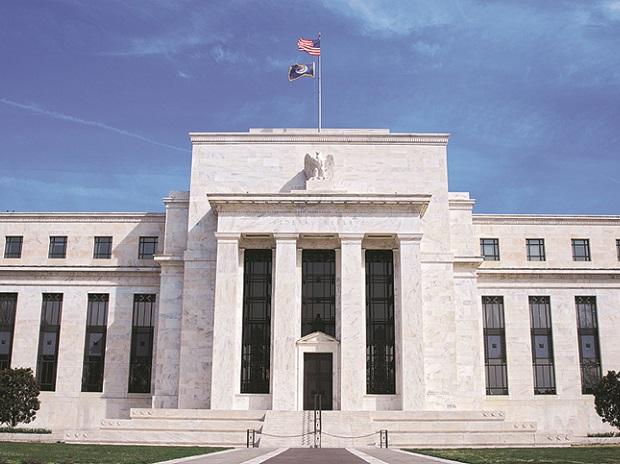
On May 1, the Federal Reserve viewed the American economy as having a solid footing and risks to the outlook were muted.

That assessment has weakened demonstrably since, and Fed Chair Jerome Powell and many of his colleagues inside the US central bank on Wednesday signalled readiness to cut interest rates as required to shore up a US economic expansion that appears to be losing steam.
What exactly changed in seven weeks to alter the outlook so much?

Tump's trade disputes are weighing

America's trade relationship has grown more strained in recent weeks with China and Mexico, two of the United States' top trading partners. When the Fed held its April 30-May 1 meeting, Washington and Beijing appeared to be closing in on a trade deal that would avoid an escalation in the trade war between the two countries.

That changed on May 5, when President Donald Trump unleashed an angry barrage of tweets, complaining that China had reneged on promises it had made in the talks and threatening to ratchet up tariffs on Chinese goods.

The negotiations unravelled and Washington hit China with higher tariffs on some $200 billion worth of goods on May 10, prompting China to retaliate. Washington is also threatening tariffs on another roughly $300 billion in Chinese imports if the two sides don't reach a deal soon, with Trump and Chinese President Xi Jinping expected to meet at a Group of 20 summit in Japan next week.


 Trump then turned his sights on Mexico, and on May 30 he threatened new tariffs on all Mexican imports if America's southern neighbour did not do more to stop the flow of migrants across the US border.

Wednesday, May 22, 2019

Trade tensions are starting to pull foreign-exchange markets into the arena

International News
Trade tensions between the US and China are starting to pull foreign-exchange markets into the arena. Yet far from embracing their currencies as a weapon, many countries are being forced to take a defensive posture against the almighty dollar.

Central banks seem more intent on keeping their currencies steady and stopping money from escaping rather than engaging in devaluations to boost their competitiveness in trade. Officials in China, South Korea and Indonesia on Wednesday were among those taking steps to buoy their currencies as the prospect of more rapid depreciation raised the specter of capital outflows.

In the meantime, the standoff between the world’s two largest economies is pushing uneasy investors into the greenback and US policy makers may face problems if the stronger dollar -- which is currently near its highs for the year -- is seen as crimping their efforts to promote higher inflation.

The forces roiling currencies are magnifying the focus on China and how it will handle a cheapening yuan. Options traders are pricing in around a 35% chance that the renminbi will by year-end weaken past 7 per dollar -- a level unseen since the financial crisis. At the end of March, the probability was just 15%. That kind of depreciation would threaten to heighten tensions with the US and potentially drive emerging-market currencies broadly lower.

“The outcome of the trade war should be to bid the dollar, drain emerging-market foreign reserves,” and push investors into Treasuries, said Sebastien Galy, senior macro strategist at Nordea Investment Funds. “At the end of the day, there is only one winner, the dollar.”


 Markets have been buffeted by uncertainty as the trade impasse shows no sign of abating...Read More

Monday, May 6, 2019

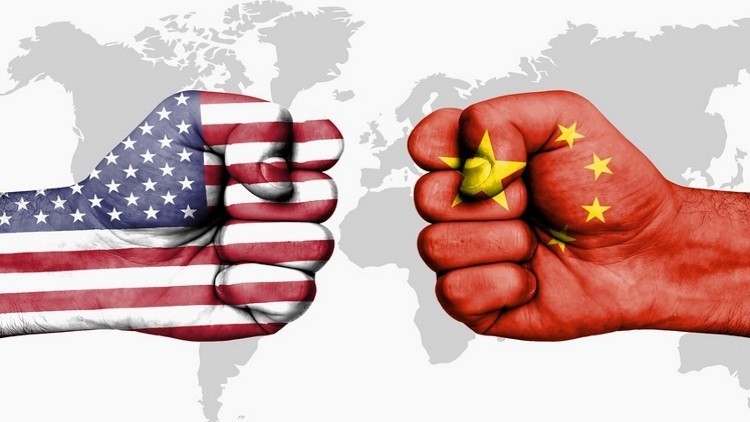
Change or suffer consequences: Trump dares China with trade tariffs

International News

By threatening to raise taxes on Chinese imports, President Donald Trump is throwing down a challenge to Beijing: Agree to sweeping changes in China's government-dominated economic model or suffer the consequences.
The unexpected ultimatum, delivered via tweets on Sunday and Monday, shook up financial markets that had expected the world's two biggest economies to resolve a year-long standoff over trade, perhaps by the end of the week.
"It's a significant change in the president's tone," said Timothy Keeler, a partner at the law firm Mayer Brown and former chief of staff for the US Trade Representative.
"It certainly increases the possibility that you'll have no deal."
For weeks, Trump administration officials had been suggesting that the US and Chinese negotiators were making steady progress. A Chinese delegation is due to resume talks Wednesday in Washington.
Suddenly on Sunday, Trump said he had lost patience: "The Trade Deal with China continues, but too slowly, as they attempt to renegotiate. No!" he tweeted.And he said he planned "shortly" to slap 25 per cent tariffs on another $325 billion in Chinese products, covering everything China ships to the United States.

 Michael Pillsbury, director of the Hudson Institute's Center on Chinese Strategy and an adviser to the Trump White House, said the president's tweets suggest frustration that Chinese leaders "are trying to take back concessions they already made."The two countries are engaged in high-stakes commercial combat over China's aggressive push to establish Chinese companies as world leaders in cutting-edge fields such as robotics and electric vehicles.

Sunday, May 5, 2019

Trump's tariff threat provokes China to delay next round of trade talks

International News

China is considering delaying a trip by its top trade negotiators to Washington this week, according to people familiar with the matter, after US President Donald Trump threatened the country with steeper tariffs over the pace of trade talks.

Trump on Sunday raised pressure on Beijing to strike a trade deal by announcing he would increase tariffs on $200 billion of Chinese imports to 25 per cent from 10 per cent on Friday. He also floated the possibility of extending a new 25 per cent duty on another $325 billion in imports that aren’t now covered.

“Risks of a full blown trade war are escalating,” said Chua Hak Bin, a senior economist at Maybank Kim Eng Research Pte. in Singapore. “Trump’s threat may backfire as China will not want to negotiate with a gun pointing at their heads.”

China’s yuan plunged the most in more than three years and its equity markets were roiled as markets unwound bets on a resolution to a trade war that’s weighed on global commerce and forced companies to rethink supply chains. The Aussie dollar fell while the yen climbed.
Lengthy Talks

Chinese Vice Premier Liu He was scheduled to arrive in Washington on Wednesday with a delegation of about 100 people for what had been shaping up to be possibly the final round of negotiations. US Trade Representative Robert Lighthizer and Treasury Secretary Steven Mnuchin visited Beijing last week for talks they described as productive.


 The US had been targeting May 10 to announce a deal, that would be finalized and signed by Trump and Chinese President Xi Jinping later at an official summit, people familiar with the negotiations said last week.

Thursday, March 14, 2019

Trump's trade deal with China may relieve Huawei from espionage charges

International News

The US-led campaign against Huawei Technologies Co., China’s telecom giant, has attracted a lot of attention for the indictment of the company’s chief financial officer, Meng Wanzhou. On Thursday, Huawei’s lawyers pleaded not guilty in a New York federal court to 13 counts of fraud involving an elaborate scheme to violate US sanctions against Iran.

That case is no doubt important, not only because of the possibility that Meng, the daughter of Huawei’s founder, could face incarceration. It is also a major irritant in US-China trade talks.
That said, the case is a sideshow. Of greater consequence is a renewed US campaign to pressure and persuade America’s allies to keep Huawei technology and equipment out of the next generation of wireless networks, known as 5G. The stakes in this campaign are much bigger than U.S. market share or the effectiveness of Iran sanctions. If Huawei’s chips and routers find their way into this new network, everything from digital privacy to intellectual property could be at risk.

US intelligence agencies, along with those of many of its allies, have concluded that Huawei’s equipment provides China’s military with a backdoor into the telecom systems that use it.
“Huawei is a spy agency for the Communist Party of China, thinly veiled as a technology company,” says Senator Ted Cruz in a March 14 letter to Secretary of State Mike Pompeo and Director of National Intelligence Dan Coats.


 The U.S. intelligence community has been sounding this alarm for years. Only recently, however, have these worries begun to inform policy. Pompeo himself has been the public face of it, warning last month on a tour of Eastern Europe that it would be “difficult” for the U.S. to partner with countries that use Huawei equipment...Read More